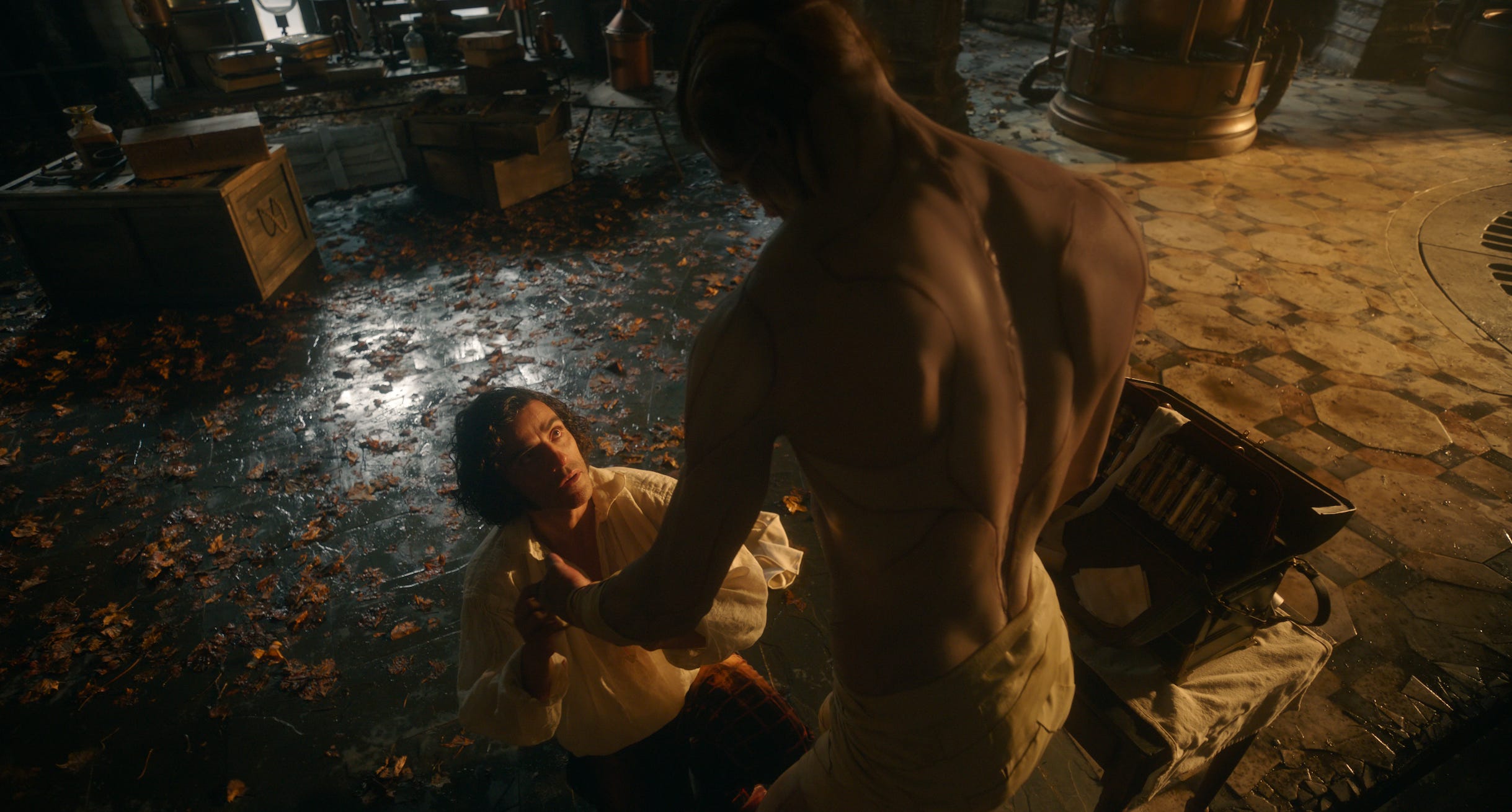
Guillermo del Toro may traffic in monsters, but his most forceful decree on Frankenstein was entirely human: “Fuck AI.” That was the first marching order supervising sound designer and supervising sound editor Nelson Ferreira remembers hearing—a line in the sand that instantly clarified the mandate for the team bringing the film’s soundscape to life. When you’re working with del Toro, art is made by people, not prompts, and sound is more than decorative.
For the veteran sound crew—Ferreira, supervising sound editor Nathan Robitaille, production sound mixer Greg Chapman, re-recording mixer Brad Zoern, and re-recording mixer Christian Cooke—that edict was a familiar one. After nearly a decade of collaboration, they’ve built a shorthand with del Toro that means nothing is too small or too strange to chase, be it the perfect silk rustle or fire that growls as it devours a tower. The Frankenstein soundscape is what happens when a director trusts his artists to interpret (or misinterpret) his requests, and the team knows how to follow that trust into the darkness.
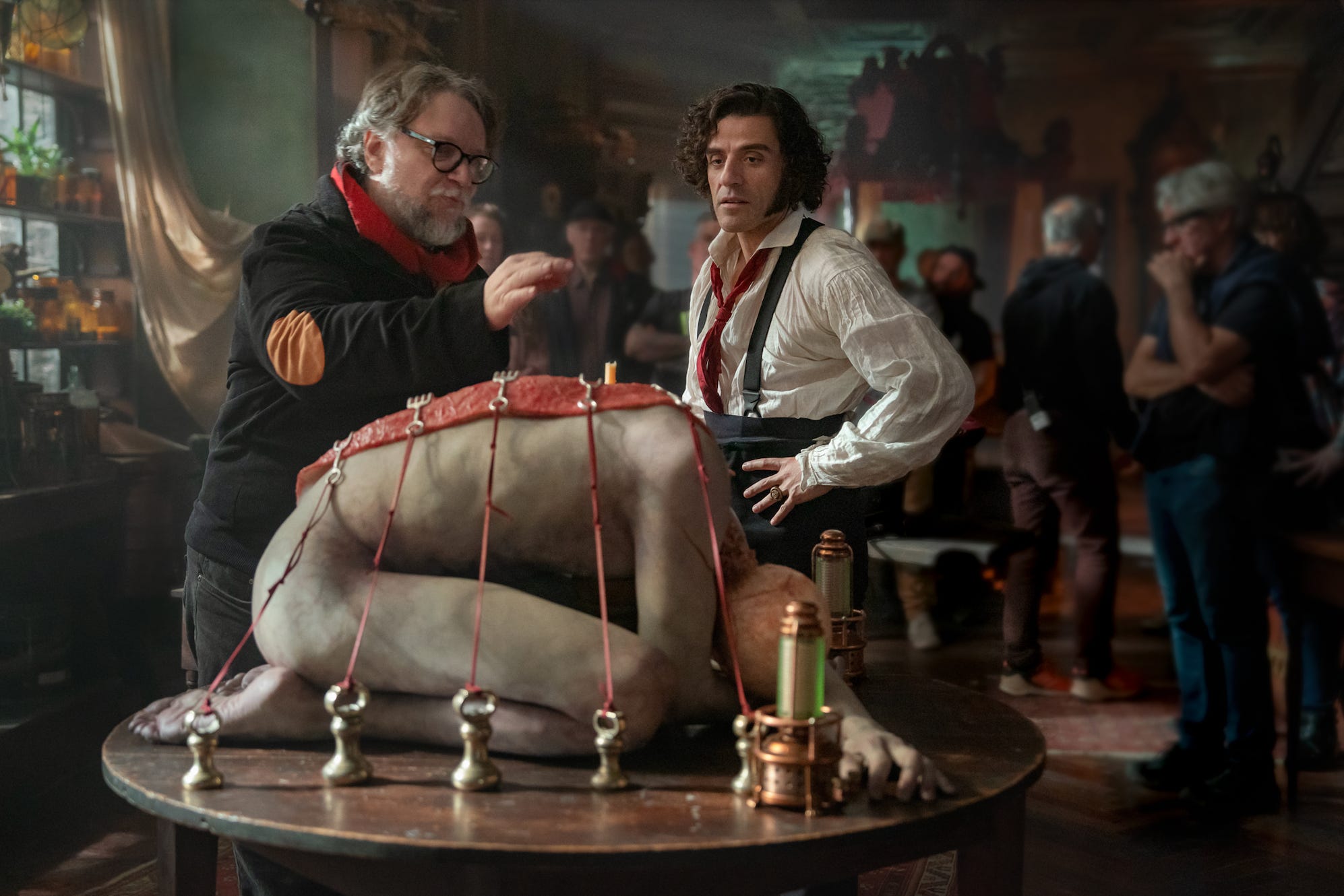
Since this is a del Toro film, we should begin by saying, fuck AI.
Nelson Ferreira: He said it right from the beginning on this movie. He said it right from day one.
So when all of you joined, what were the marching orders to bring the soundscape to life for Frankenstein?
Nathan Robitaille: Nail it. That’s the Guillermo way. You need to bring your A game. And he doesn’t give a lot of words or make a lot of requests. We all get started, and the expectations are high, but we’ve all worked with him for around a decade and know what the pace is and how hard we have to reach.
When you have that lengthy collaboration under your belt, is it more daunting that the expectations are already this high? Or is it freeing?
Nathan Robitaille: I won’t speak for everyone, but I’m gonna say it makes it less daunting because of the shorthand. Knowing how important this movie was to him, this should have been intimidating, but having as many miles behind us with him as we do, things clicked into place.
Nelson Ferreira: I can say that, after every project with Guillermo, I certainly have felt better at what I do. The more you work with him, the better you are, right? And the more you feel you can handle.
Greg Chapman: I would agree with Nelson. And with each subsequent project, I think you have confidence going forward. The expectations are high, but you’ve been through that, and you have a team of people who you know and have worked with before. And that makes things a lot nicer and easier.
Brad Zoern: Like Nelson said, the shorthand is definitely there, and it makes things much smoother. There’s a mutual trust that we’ve built, and that’s huge.
Christian Cooke: And the shorthand with our team as well. We all know where we’re coming from and what we’re doing, and we can just look over and go, yeah, I know what you’re doing. It’s a very comfortable shorthand that we all have as collaborators.
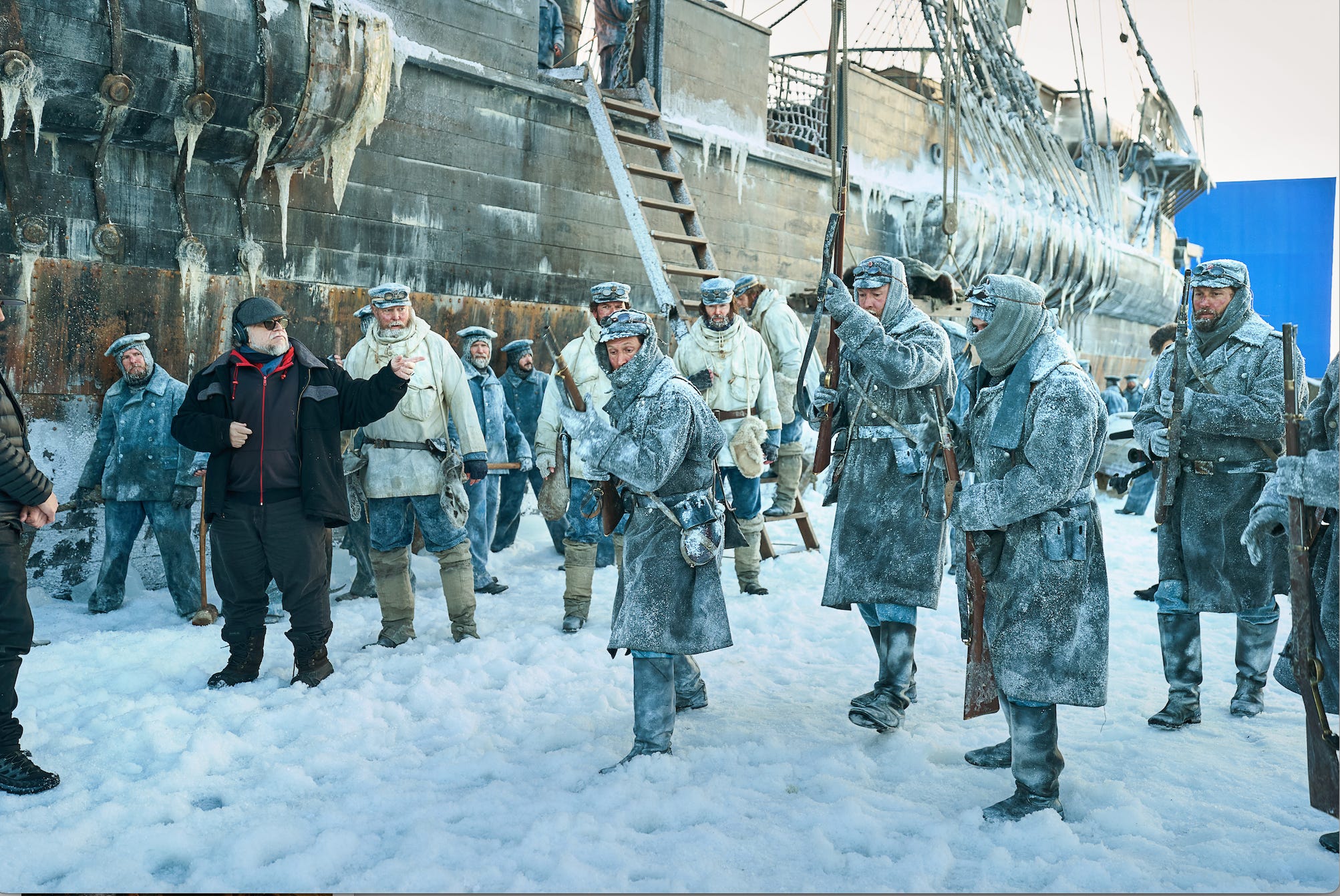
Greg, you were there on these massive practical sets. What was it like capturing as much sound as possible in those environments?
Greg Chapman: It’s definitely a challenge on a Guillermo project. Guillermo likes… how can I say it? His atmospheres are thick. If possible, there’s something in the atmosphere, like snow or rain or wind. All of these things are noisy. So that’s a little dynamic between me and our collaborators on set who are creating all these luscious backgrounds. “Do you need that fan that close? Can it move away a bit? Can you dial it down a bit? Do we need that much snow on this shot? Could we put that in with visual effects later?” There’s constantly that struggle, that dynamic, to get whatever we can get away with visually and still have as good of sound as possible.
As a sound mixer told me a few weeks ago, if anyone else is doing their job correctly on set, they’re making your job harder.
Greg Chapman: That’s right. Everybody else is concentrating on a visual thing, and so to do our job properly, we have to have really good relationships with everybody. Like, the lighting has to be done in such a way that a boom can be above their head. And the costumes have to have a radio mic hidden in them. Every department, all the way down the line, has to make allowances for us. That’s another good thing about knowing all these people and having worked with them a lot before, it helps make our job better.
Nelson Ferreira: I’m gonna interrupt just to say that Guillermo is an advocate for sound. Getting good sound is not an inconvenience to him. As he said when we worked with him for the first time, “I’m a sound whore. I’m just gonna warn you of that.” And he is, he really is. He’s all over it.
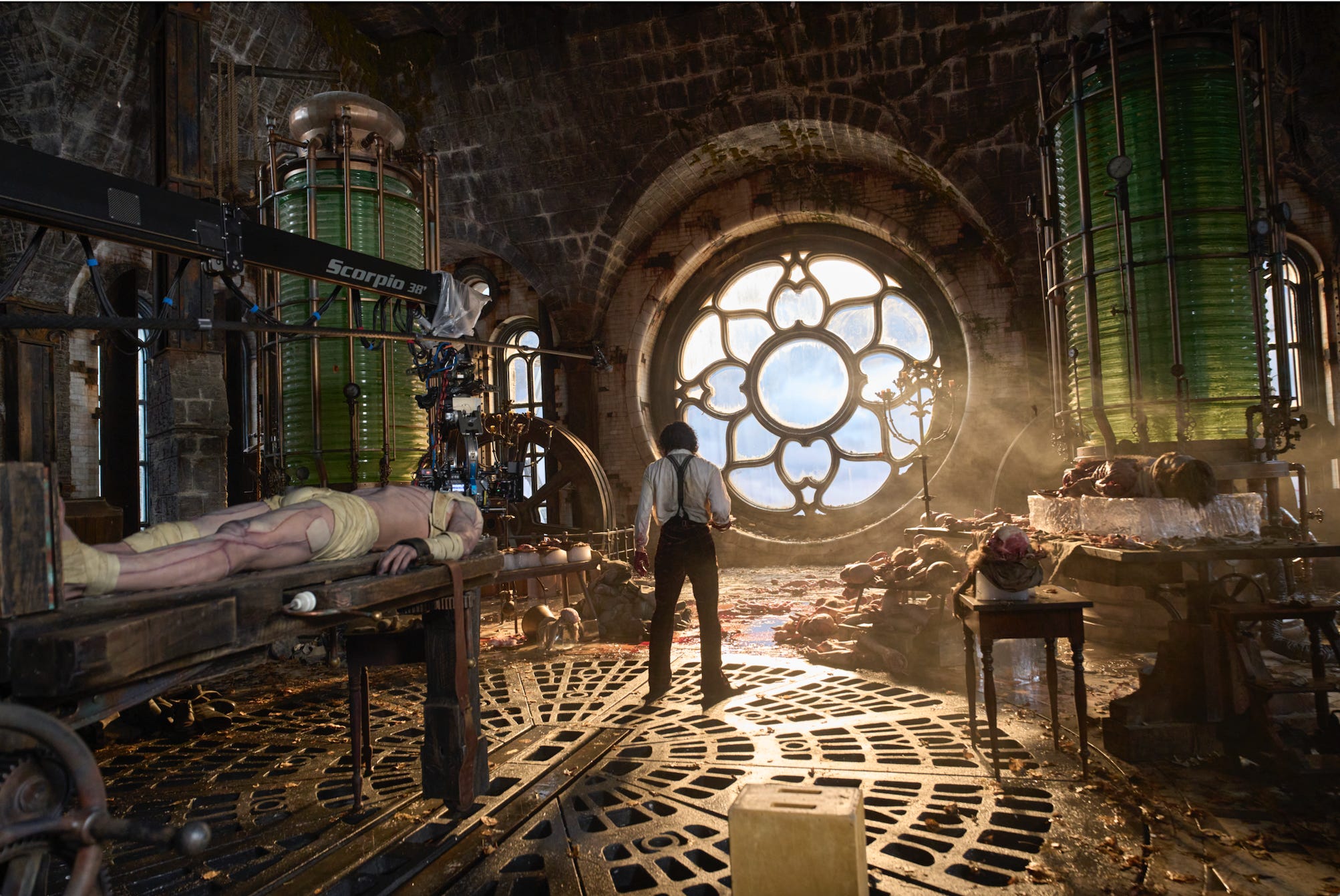
My God, what a gift to hear a director say that he’s a sound whore. That does not happen very often. With a project like this, one told from two very different perspectives, how are you balancing those varying tones, sonically?
Nathan Robitaille: There were a lot of visual cues, not just in the set design but in the editing style. The first half was very chaotic, following Victor. And then we go into the back half of the movie, and it becomes a fairytale, which has much more sweeping shots. They would hold on those in the edit. But even beyond that, we were getting VFX updates that were toning down some of the gore in some sequences or ramping something up. Like when Victor’s leg breaks, escalating or de-escalating visually. And I think that those things often give us a lot of clues as to where we should go tonally.
The greatest example would be in the cellar where the creature was being held, chained up. We were getting the VFX updates, and we have to check every one of them to see what’s changed. And half the time I couldn’t even clock the difference. But in the times where I could, the differences were very suggestive. There was a close-up of a wound on the creature’s abdomen. The first version of that would’ve been makeup, and then they would’ve added bruising in VFX, the color of the bruising would’ve changed. The intensity of the bruising would’ve changed. And something like that informs what we’re gonna be reaching for in terms of atmospheric elements. Are we thinking about the rain dripping from the spire of the tower? Or should we hear something more haunting and suggestive than just the literal ambience? So yeah, I would say that a lot of that pace and a lot of that is set by the visuals.
Brad Zoern: Ultimately, we’re a slave to the story. From a mixing point of view, it’s, “OK, do we need emotion with the music? Will the sound effects lead this scene?” It’s always a tug of war and figuring out what’s gonna serve the scene best.
And certainly finding the balance between sound and score as well.
Brad Zoern: Yeah. Because the score is so rich and beautiful. You don’t want to squash that, and you don’t want to get in the way of that. From the sound effects point of view, you have to support and find the places where you lead.
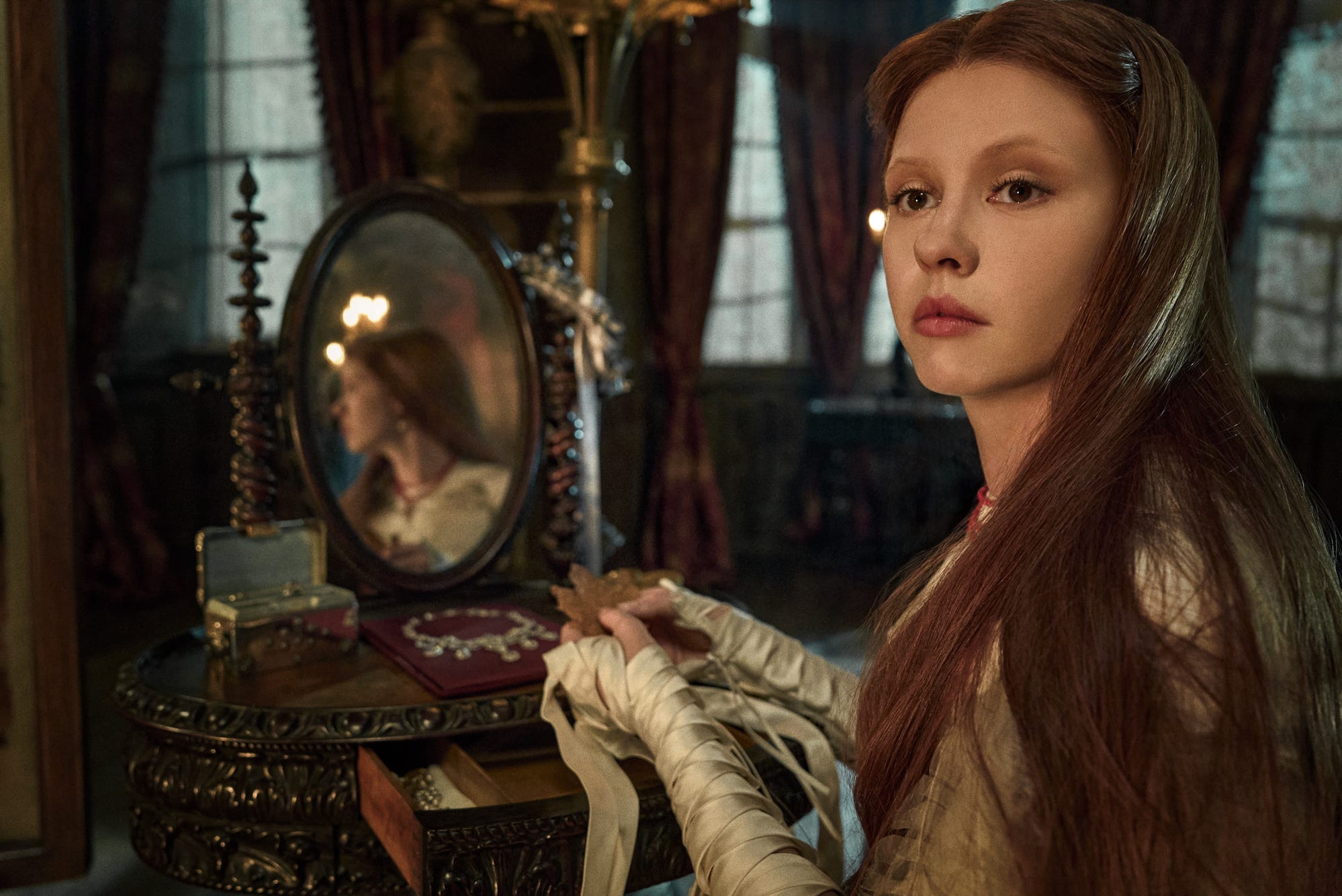
I love that this is a period drama, but it’s also so brutal. It’s the rustling of Mia Goth’s gorgeous costumes, but it’s also a pack of wolves devouring flesh.
Brad Zoern: We went back with Mia’s costume a few times, where Guillermo was like, ‘That’s not silky like I want, I want a little more.’ I think Nathan’s wife had a dress or something that was silk.
Nathan Robitaille: I sacrificed a silk blouse on a previous project with Guillermo because we weren’t finding the right texture of silk. So I had some recordings in my personal library of that. And when the creature pulls the glove off of Elizabeth’s hand, he really wanted that to sound like a very slippery piece of silk. Historical silk isn’t always the slickest sound. But occasionally, Guillermo wants to sidestep reality and go with what he feels.
“More silky!” Talk about having shorthand with a director.
Nathan Robitaille: Yeah, he’s asked for more silky more than once.
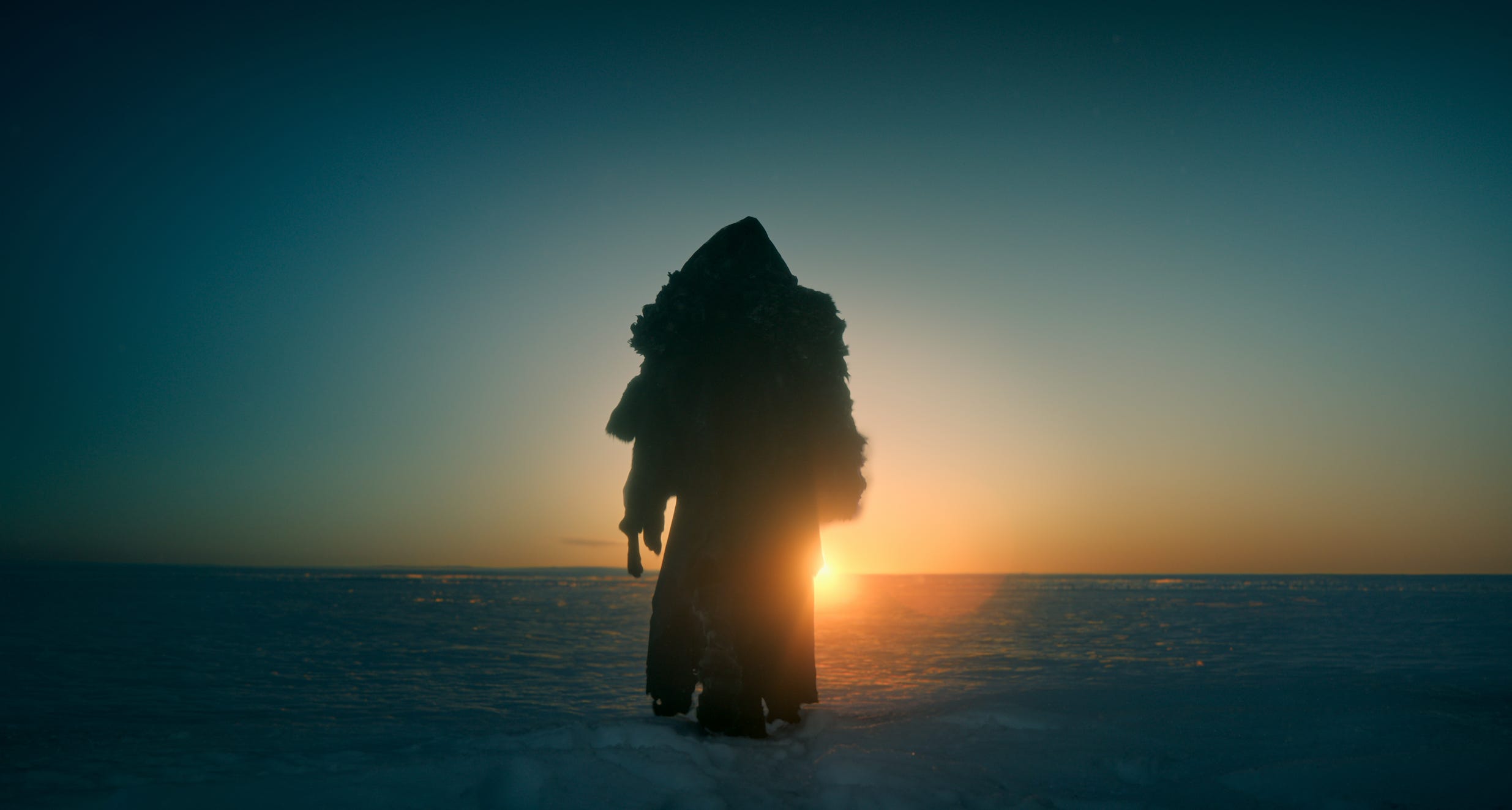
But to your point, one of the reasons Frankenstein works so well is it’s grounded but also sweeping and reality plus. What was it like finding those moments to amp up reality? Was it del Toro leading you? Was it having worked with him before and understanding the assignment?
Nathan Robitaille: Both. He does give some very specific direction when he knows he wants to hear something, and he really wants it to land and sound like something in the audience’s memory. He’ll give us that direction, but he’s not a man who wastes any time justifying his requests. He just lets us decide for ourselves what we think that means. And I think that’s a deliberate thing on his part, where he’ll leave it open for interpretation—or misinterpretation—because there are little happy accidents that come out of the misinterpretations.
Maybe it sheds light on a blind spot. Maybe it’s an idea that he wants to run further with. That sort of hyper reality, it comes from detail. It’s making sure that every fine detail that we could add, we did.
There have been so many projects this year involving fire, and I’m really curious how you created the soundscape for the fire in the tower, especially since that sequence is reality plus.
Nathan Robitaille: That was a very additive sequence. It started rooted in reality, and then you just escalate and reach deeper into more and more bizarre elements until you find yourself on the last day of the mix in that sequence. He wants the fire to sound like it’s alive as it pours down the stairwell and follows Jacob down the tunnel. It started as this crescendo, where we were adding natural fire and then supernatural fire and then things that weren’t even fire, like roars and growls and snarls, so that we could really amp up the drama. Then there was this beautiful opportunity to suck it all out and play nothing when he’s in free fall. It was a real game of addition and subtraction.
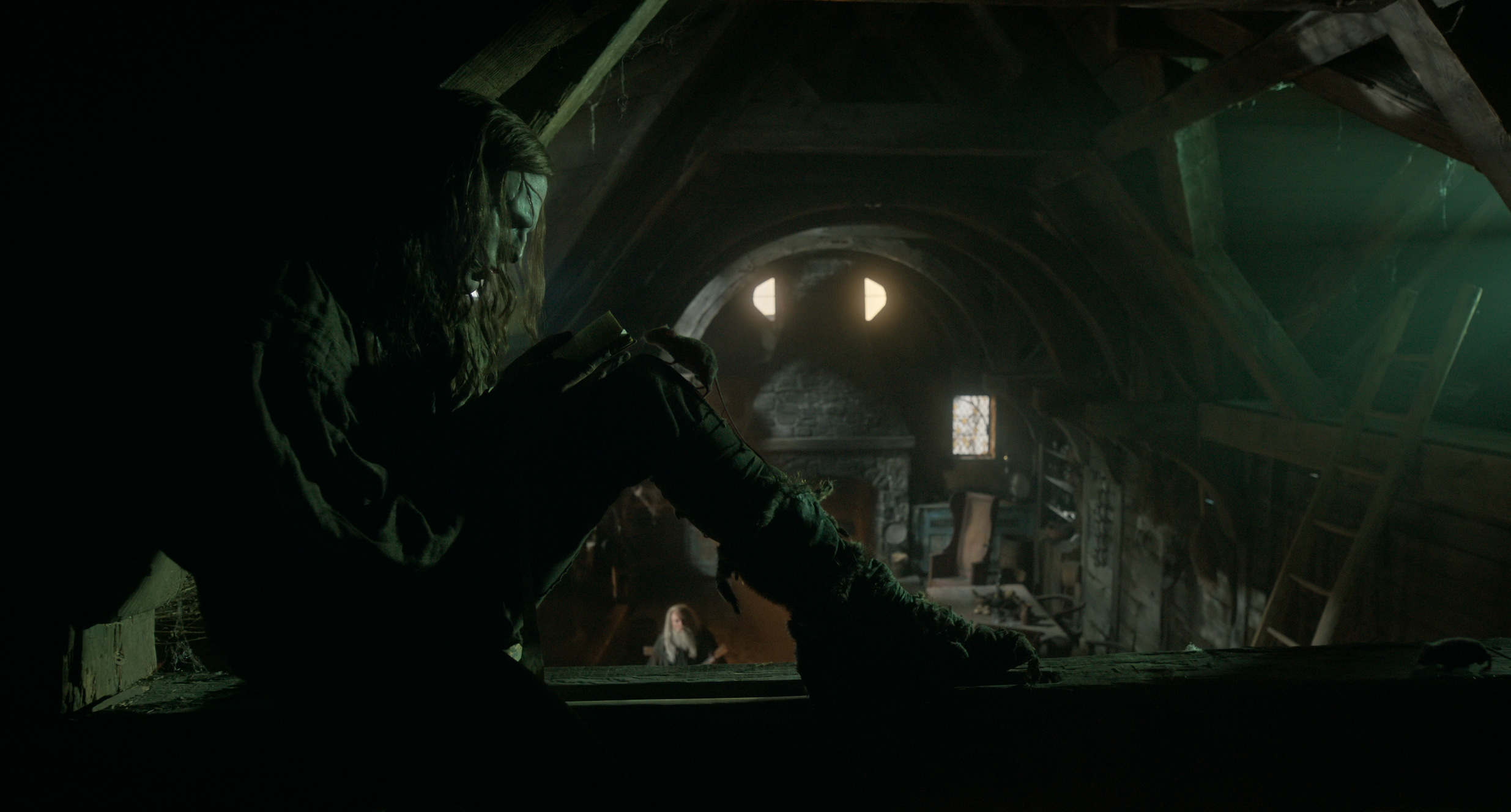
And Christian, I’m curious about working with Jacob and finessing that voice.
Christian Cooke: Yeah, [putting in] the additive parts that Nathan created. And just mixing those in at a certain level, depending on his demeanor in the movie. How much say lion roar or to use, or none. There were like 40 different tracks that Nathan created, and just getting the balance throughout the movie was something pretty intense. A lot of it was his own [performance] as well, but there was quite a bit of additive.
What were some of the elements that you added?
Nathan Robitaille: A lot of textures. We saw it coming early on. One of the first scenes that I worked on was the fight sequence outside the ship in the opening. I got a message from the editor just saying, “Hey, listen, Guillermo’s asking for animal sweeteners. He wants to hear gorillas and lions, and he wants to hear a lot of big efforts.” That’s really fun. But we all knew he was going to become this tender giant. We were gonna have these moments of intense rage where a monster needed to spring out of this guy, but it had to get there somehow. Otherwise, I think it would’ve felt like it had just been pasted on top. It would’ve felt like it came outta nowhere.
It eventually evolved into finding some key textures that were based on what I heard in Jacob’s voice. His natural voice carries a lot of warmth and a lot of power just on its own. And so allowing that to influence what animal textures I was reaching for helped glue the monster to the man in the end. And then, beyond that, it was coming up with an edit sequence that would only punch up the open vowels, the sounds that would resonate in his chest. We did every breath, every effort, every word in the entire movie. And it always comes as a massive compliment to me when people acknowledge that they can’t really hear that it doesn’t really start becoming noticeable. And that’s a huge testament to Chris and Nelson’s efforts.
And to wrap up, what was the hardest or the most complicated sequence that you worked on?
Brad Zoern: The wolf attack, for sure.
Nathan Robitaille: That came to us before any of the CG had happened, and Guillermo wanted something that sounded really horrific, and all he had in the edit was a bunch of guys in green unitards with wolf stuffies attacking Jacob. And he needed that to sound like a brutal wolf attack. That was a challenge to come up with some energy to support where we knew it was gonna go.
There were a handful of those, like when the cadaver wakes up on the table in Victor’s apartment. I got called into the picture edit really early on, and they had a white wire frame, CG man on the table. And he wakes up, and I really wanted it to sound shocking, like this man didn’t want to go back to death where he came from. It had to sound desperate. What wound up selling it was Guillermo got in the booth, and he gave me some really good gasps to try and keep this guy alive.
Greg Chapman: There were a few hard days, but the ship stuff was all challenging. The ship was beautiful but huge and elevated quite high off the ground. So you had to get up there, make sure everything was working perfectly, all the radio mics and the boom operators and the voice of God system, because then all the ladders would be pulled away and this whole machine would start going forward and all the wind machines and snow and everything like that. We had to have a game plan in place for all of that. But it all worked out pretty good, I think.

 Meet Me at Crafty
Leave a comment