For a movie about the emotional archaeology embedded in the walls of a family home—one based on an actual dwelling—Joachim Trier’s Sentimental Value made a bold production-design swing: The house is only half real.
![The 'Sentimental Value' house rendering [Courtesy of the filmmakers] production design](https://meetmeatcrafty.com/wp-content/uploads/2025/11/screenshot-2025-11-24-at-12.53.34-pm.png?w=1000)
What looks like a warm, lived-in Oslo home is, in fact, a fully rebuilt environment on a soundstage—complete with 35mm film, hand-tiled fireplaces, double-paned century-accurate windows, 3D-scanned exterior landscapes, and a terrifyingly convincing LED volume that lets the house exist across practically the entire 20th century.
“It was not planned to be that much of a build,” production designer Jørgen Stangebye Larsen says. The second-floor bedrooms were always going to be a set, and the final montage required something controlled. But the more he looked at the shooting schedule, the more he realized they were either going to falsify the story or build a house and utilize the Volume.
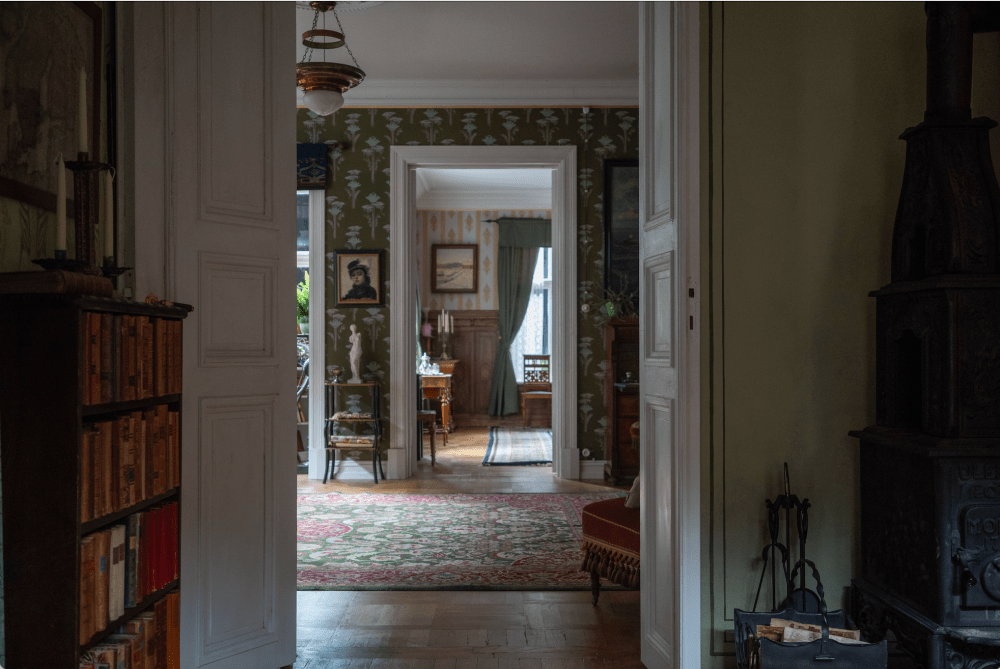
The LED screens weren’t an easy sell. “Everybody was a bit scared of this technology,” he says. Shooting an intimate family drama with the same tech used on The Mandalorian is not the obvious choice, and shooting it on actual film only added to the risk. But Larsen and his team built partial sets and tested everything that would appear in the world outside those windows. The results spoke for themselves.
Inside the house, the tactile world had to be as detailed as the digital one. Everything was built or dressed to match, with floorboards of real oak, handmade wallpaper printed from salvaged historical patterns, exact replicas of the home’s double windows (with antique glass to make the light ripple authentically), and a tiled fireplace installed piece by heavy piece. “We used as much real material as possible,” he says. “It needed to match the house because you cut between location and studio.”
And then came the decades.
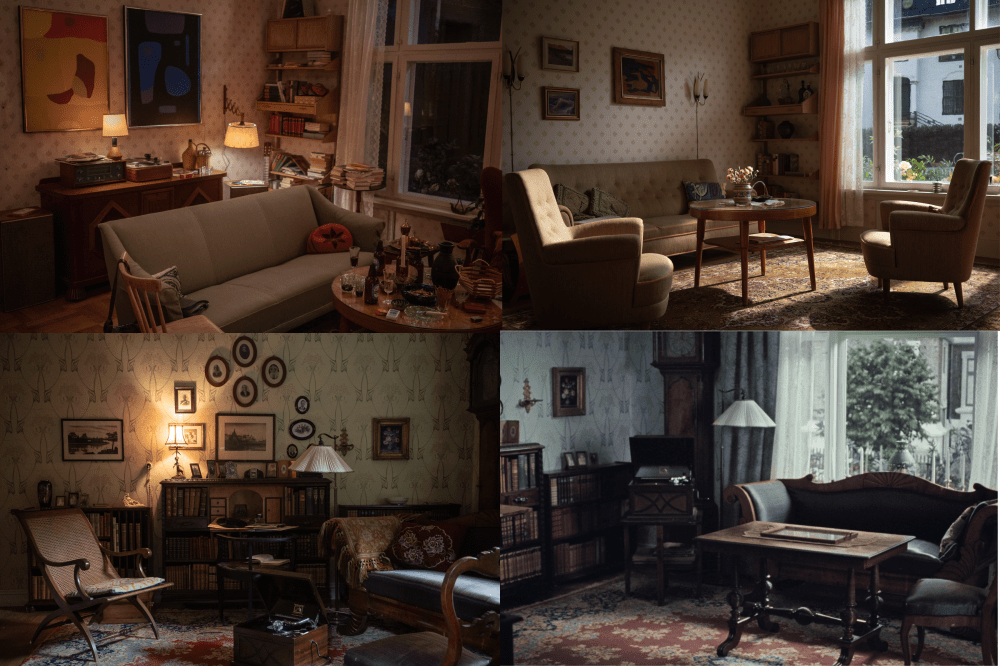
With only eight days of shooting on the set spread over roughly three weeks and often only one or two days between each era, the art department had to treat the set like an extremely dignified quick-change artist. Walls were designed with removable layers of wallpaper. Larsen and his team swapped furniture, rotated out rugs, adjusted patinas, and removed and rehung art until every period felt like it had a pulse.
The art was the true treasure hunt. Gallery owners loaned significant paintings; Norwegian artists lent personal works; fragile pieces needed to be insured and protected against constant movement as the time periods changed over.

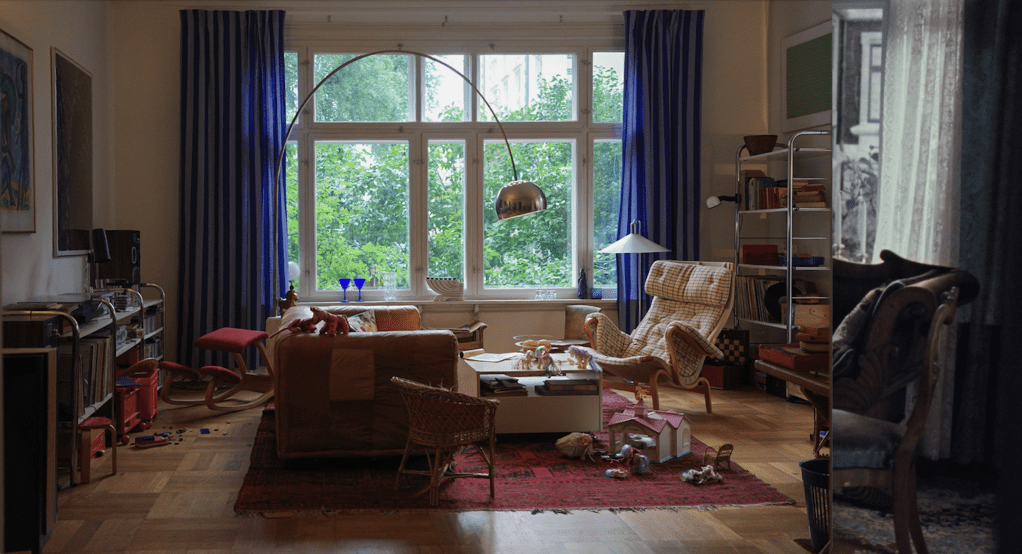
And then there’s that ending. The final sequence of the film sees the beloved family home renovated into a modern, sterile, white-on-beige showpiece, a transformation that elicited anguished yelps from the audience I saw it with. “Everybody reacts that it’s a bit sad,” Larsen says, laughing when I describe the critics’ response to the reveal as akin to decor horror. “ I think people connect to that a lot because it’s happening at a fast rate these days, that a lot of beautiful old apartments are renovated into this hotel style, almost.”
In a way, of course, the house is as fake as any well-executed movie set, no matter how period-accurate its windows are. But when a team is this in sync with the story and with the character-specific details, it’s more than world-building or set dressing. That’s authentic movie magic.
Jørgen Stangebye Larsen is a production designer whose credits include Oslo, August 31st, Cold Pursuit, and Hope.
 Meet Me at Crafty
Leave a comment