In the movie Code 3, the joke is that being a paramedic is absolute hell. The horror is that it’s also all true. And makeup designer Scotia Boyd had to build that truth from the ground up, with blood that behaves like actual blood, injuries drawn from real paramedic calls, and a sense of humor sharp enough to survive the research process. “Every one of the ambulance calls in the movie is a real call that screenwriter Patrick Pianezza responded to in real life,” she says. Wild once you’ve seen them executed in gory, explicit detail in the movie.
Boyd approached Code 3 with a level of meticulous research that can render a search history cause for concern. Before she was even hired, she was combing through photographs of the kinds of accidents paramedics encounter to analyze like paintings. “I’m picking out the colors, I’m picking out the textures,” she says. Prosthetics artist Daniella Pluchino pointed her toward a website called Documenting Reality, which Boyd describes as “the freakiest part” of her prep work. The images didn’t disturb her so much as the site’s existence. “I don’t know why it exists,” she says. “That’s the creepiest part.”
But those reference photos shaped one of Boyd’s earliest creative choices: the blood. No bright-red, syrupy movie blood. Not in this film. “By the time the paramedics get there, blood has mixed with exhaust, oil, dirt,” she says. “It’s much thinner.” She included that detail in her initial pitch email to director Christopher Leone. “I was like, maybe they’ll hate this,” she says with a laugh. Instead, Leone loved it. They met, talked, and the job clicked.
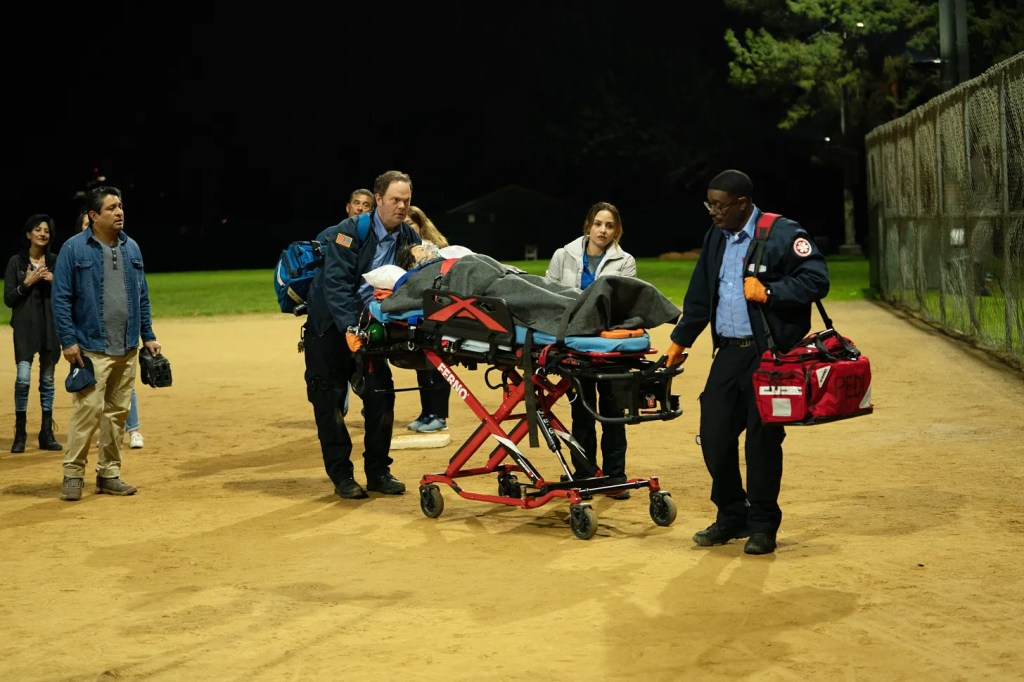
Once production began, Boyd found herself busy with Rainn Wilson’s character—“I think he was in every scene of the entire movie,” she says—while her team, Meg Wilbur and Allie Shehorn, handled applying many of the major gags. Their particular masterpiece: the motorcycle crash victim with the stick in his eye, a gag executed in the trailer and refined through photos sent back and forth. Boyd often draws digitally on her iPad to fine-tune adjustments. “Even with my own work, I need to look at the image and step back,” she says.
And of course, this is all happening under merciless HD cameras. “It has to be perfect,” Boyd says. “If you think, ‘Maybe the camera won’t see it’? It will.” Most of the film takes place during the day across Los Angeles, so she designed everything using daylight-balanced lights in the trailer.
The paramedic consultant on set (Pianezza himself) was the final line of defense. Since the injuries were based on his memories, he weighed in constantly. “Not much got by him,” Boyd says.
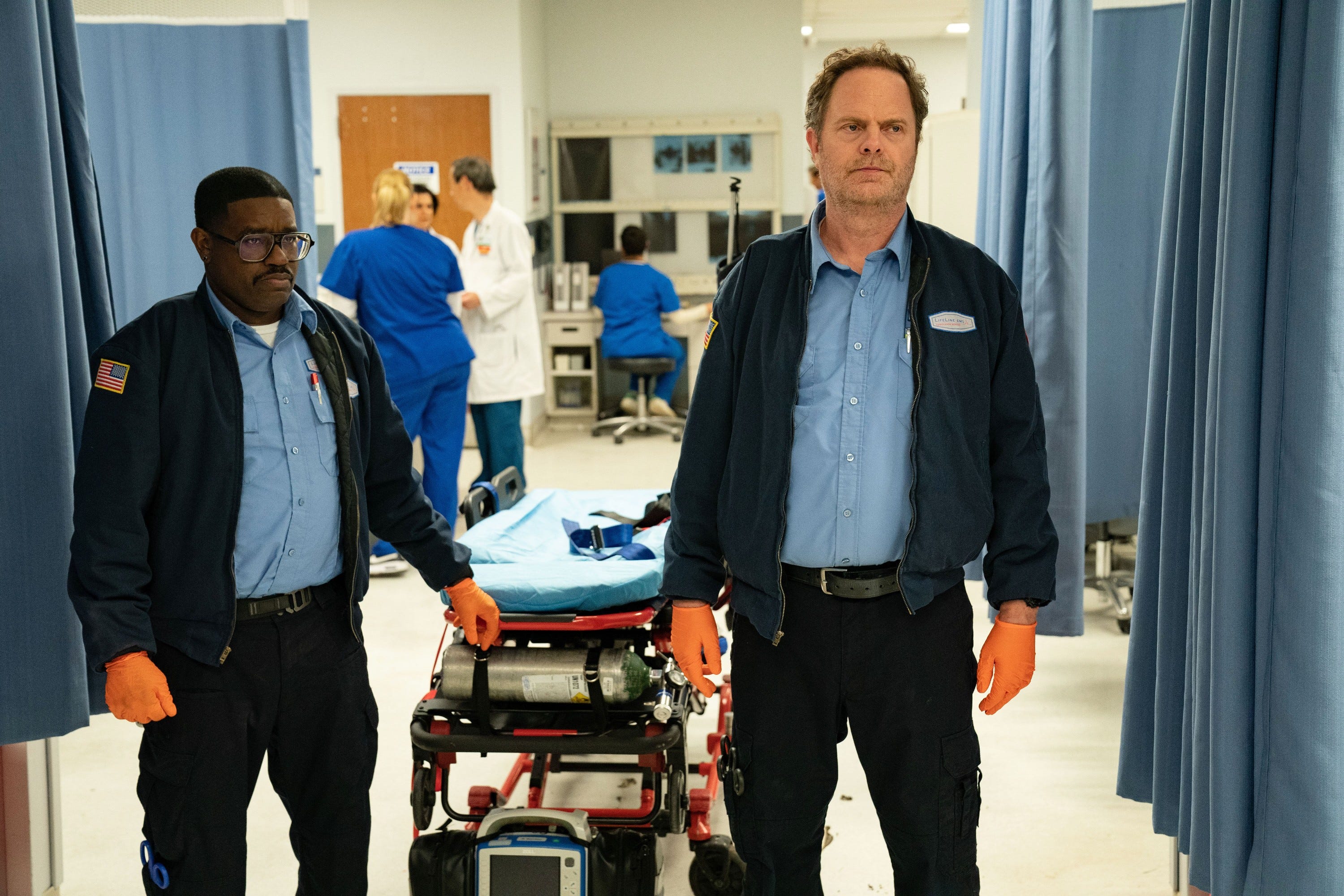
During filming, Boyd’s crew became the popular kids. Every time a prosthetic emerged from the trailer, the crew gathered to ooh and aah. “Everyone’s like, ‘Whoa, that’s so cool,’” she says. They were the Heathers of the film set—if the Heathers were elbow-deep in silicone wounds and thinning blood. Even a glamorous Beverly Hills party sequence (where Boyd got to do Real Housewives glam looks) became a brief delight for her department, though the scene didn’t survive the final cut. “We had a great time shooting that,” she says.
In the end, Boyd’s work on Code 3 walks a tightrope between authenticity and absurdity, much like the paramedics themselves. The injuries may be gnarly and the research may haunt her browser forever, but the work honors the people who show up when things go very, very wrong.
Scotia Boyd is a MUAH Award-winning makeup artist whose credits include The Boys, Star Trek: Strange New Worlds, and The Horror of Dolores Roach. Her go-to at craft services? “Peanut butter and apples.”
 Meet Me at Crafty
Leave a comment