Some movie musicals feel like movies. Some feel like musicals. Kiss of the Spider Woman is one of the rare ones that feels like both as it cuts back and forth from the Technicolor musical fantasia of Aurora (Jennifer Lopez) and the damp, claustrophobic prison cell where Molina (Tonatiuh) and Valentin (Diego Luna) live and dream. Getting those worlds to coexist without one flattening the other is the accomplishment of production designer Scott Chambliss and set decorator Andrew Baseman, who approached the film as one psychological continuity.
“We shot the musical numbers first,” Chambliss says. “But we were thinking about the prison from the beginning.” For Baseman, that was essential. He wanted the worlds to speak to each other in textures. “I wanted Easter eggs,” he says. “Something Molina would bring with him [to his prison cell].”
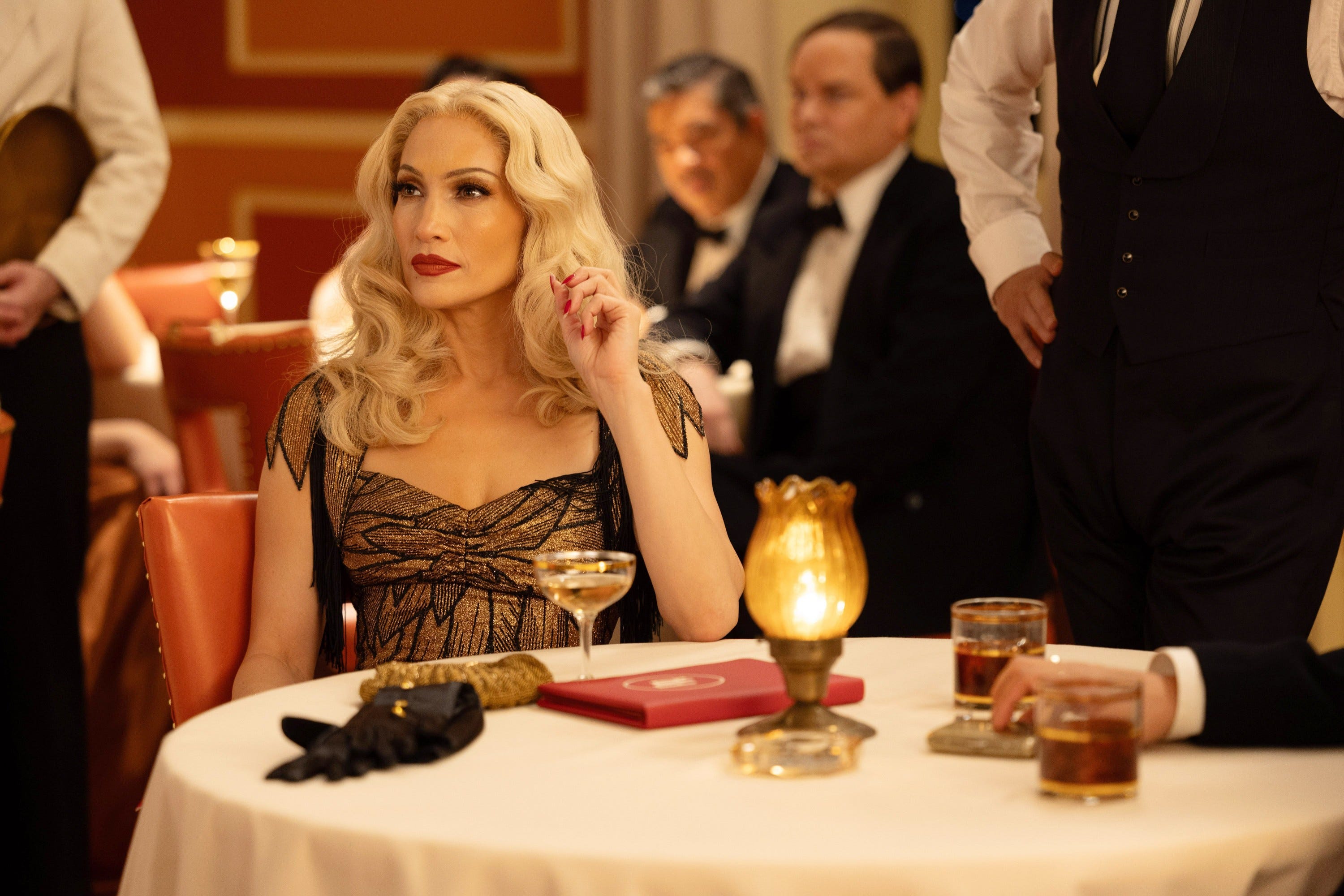
Which is how a beaded curtain became a connective tissue of the film. In the “Gimme Love” number, it’s there on a set of glossy red lacquer. Later, for Molina’s cell, Baseman tracked down wooden beads on location in Uruguay that echoed the curtain, only cheaper. A fantasy downgraded into survival. “It made more sense,” he says. “A version Molina could have.”
Chambliss describes the musical numbers as “self-conscious artifice,” designed to look painterly, theatrical, and deliberately unreal. “If it looked realistic, we had failed,” he says. This is where the movie leans fully into MGM-era style—not literal reproductions, but the sensation of Vincente Minnelli dream logic, using color as vividly as dialogue to tell a story.
Not to mention constructing sets for a musical number a day, ones that didn’t have the choreography in place until late in the design process. “For every number, I would say it was down to the wire what the final choreography was going to be,” Chambliss says. “Every day, we were designing and building and decorating these sets on such a fast pace.”
“ We got calls sometimes the night before asking for certain pieces for rehearsal,” Baseman adds. “So we had to come up with set dressing and build set pieces that would accommodate the dances, and then either replicate or find actual pieces that would then be in the movie. That was tricky, but we got that done.”
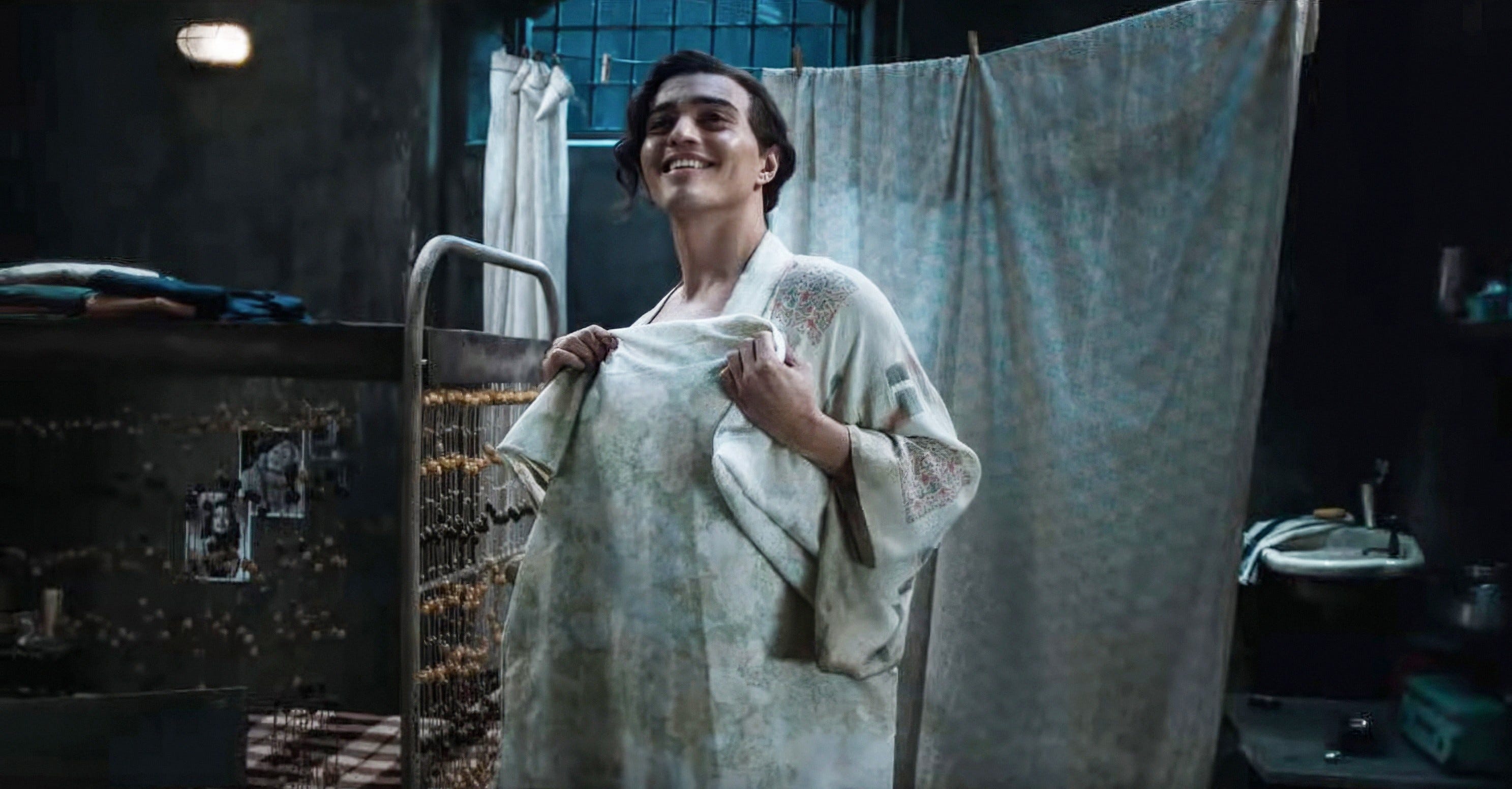
While they were designing illusions of glamour, the reality waiting beneath was an old, abandoned prison in Uruguay. “It was a fucking mess, dilapidated and infested,” Chambliss says. And yet the prison could not simply be grim. “It needed to have as much visual pitch as the musical numbers. In the prison, it’s operatic melodrama. And our visual world had to be the correct balance. One couldn’t feel drably realistic. If one world felt flat, the film wouldn’t work.”
Then there’s the backstage pleasure of referencing Old Hollywood without reenacting it. The spider’s lair riffs the Maria Montez jungle melodramas; the “Gimme Love” number tips toward Singin’ in the Rain on purpose. And as much as the musical sequences are a love letter to the era’s over-saturated palettes, so too is Molina’s apartment, glimpsed much more briefly in the film than it was in the script.
“ In his bedroom, I had gray chiffon curtains that matched the ones in the finale,” Baseman says. “Then on the wall, we did a collage of movie posters and 8 by 10 black and white glossies of his favorite stars [similiar to his prison cell wall]. Under the window, we put a vanity, which referenced the two vanities we did in Aurora’s hotel suite. There were a lot of little things like that.”
That’s the kind of subtle detail that works on the viewer subconsciously, connecting not just Molina and Aurora but also the thread that runs through movie history as a whole: made up of equal parts gods and goddesses and the mortals who worship them.
Scott Chambliss is an Emmy and ADG Award winner whose credits include Alias, Star Trek, and Swingtown. Andrew Baseman is an Emmy nominee and ADG Award winner whose credits include Severance, Crazy Rich Asians, and The Americans.

 Meet Me at Crafty
Leave a comment