Sound mixer Allison Jackson had one of the coolest (and most daunting) homework tasks imaginable as part of her job interview to work on Spike Lee’s Highest 2 Lowest.
“A couple of days before Christmas, he called me and said, ‘I want you to watch every movie I’ve done with Denzel Washington—in order—and write a little blurb about what you thought.”
Jackson points out that she went to film school, so she knows how to write a critique. But she also knows an even more valuable skill: “ praise in a critique.” After that, they had dinner, she sent over a résumé and references, and the job was hers.
Highest 2 Lowest (a loose remake of High and Low, about a wealthy man trying to pay a ransom) features Lee’s typically New York-centric filming style. And that also included many, many days of filming complicated scenes on the subway.
Some shots were captured on a set, but a lot of them took place on three actual subways. With three cameras. “ And I, as a sound mixer, can only be in one place,” Jackson adds wryly. Not to mention the subway car movement meant that at some point, she’d be out of range of something. “So it was like, ‘Alright, what is the most important here? What do I choose?’ That was a challenge in and of itself.”
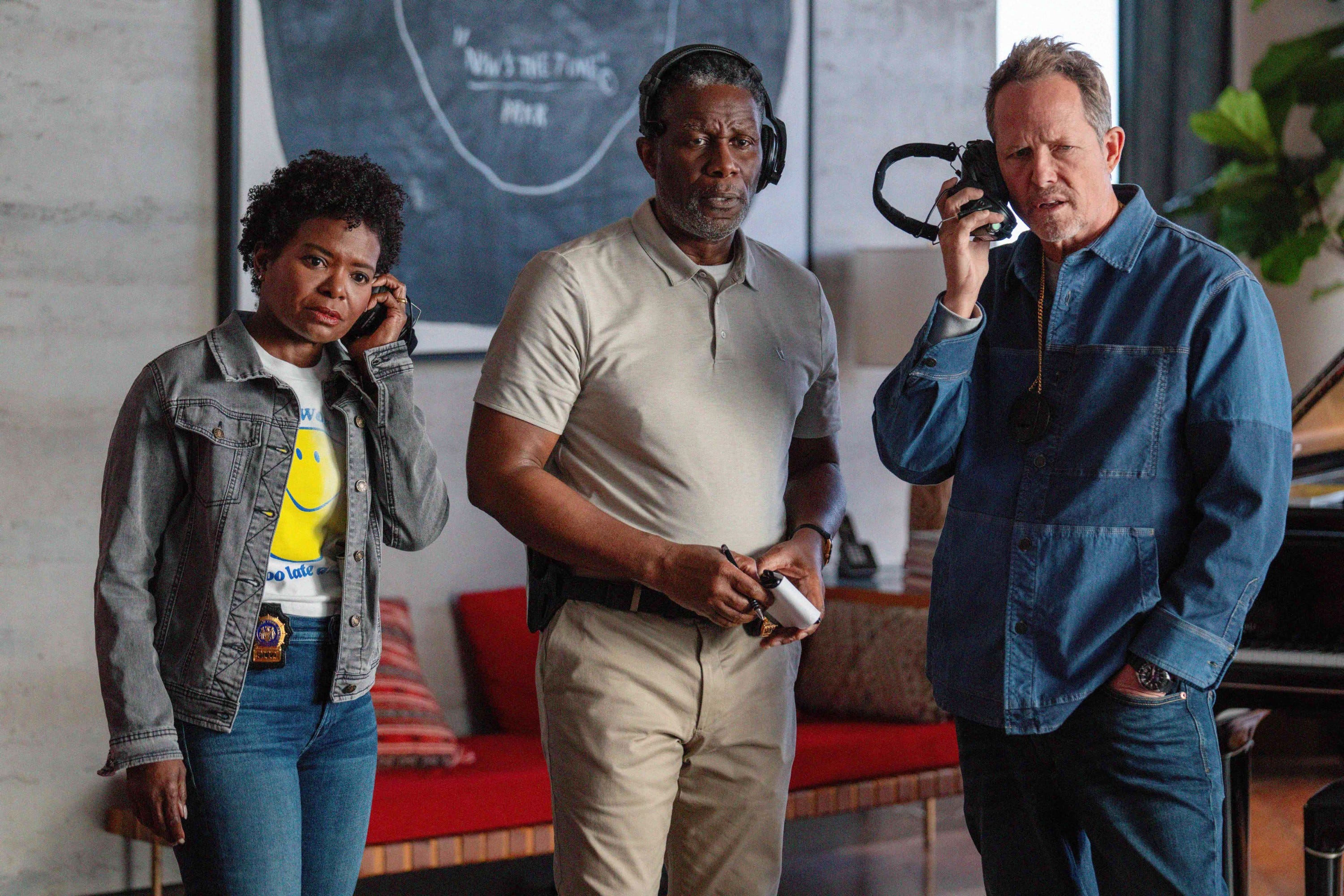
If that sounds chaotic, it was. But Jackson doesn’t describe it with panic. She has the calm acceptance of someone who works in a craft where near-impossibility is the baseline. Was this a case of, “No one can see how stressed I am, I am projecting serenity and a polished demeanor?”
Jackson laughs. “I think that’s every day as a sound mixer.”
Another subway sequence required a different kind of improvisation. Dialogue was happening below on the platform, while camera coverage above followed cops entering through turnstiles. She placed her main cart upstairs and positioned a bag rig downstairs, both tuned to the same wireless setup, so whichever world the actors were in, the scene would be captured. The mix was live and flexible in the way that only experience allows. “I knew it would get it,” she says. “And then I had the faders up for when they came back through the turnstiles.”
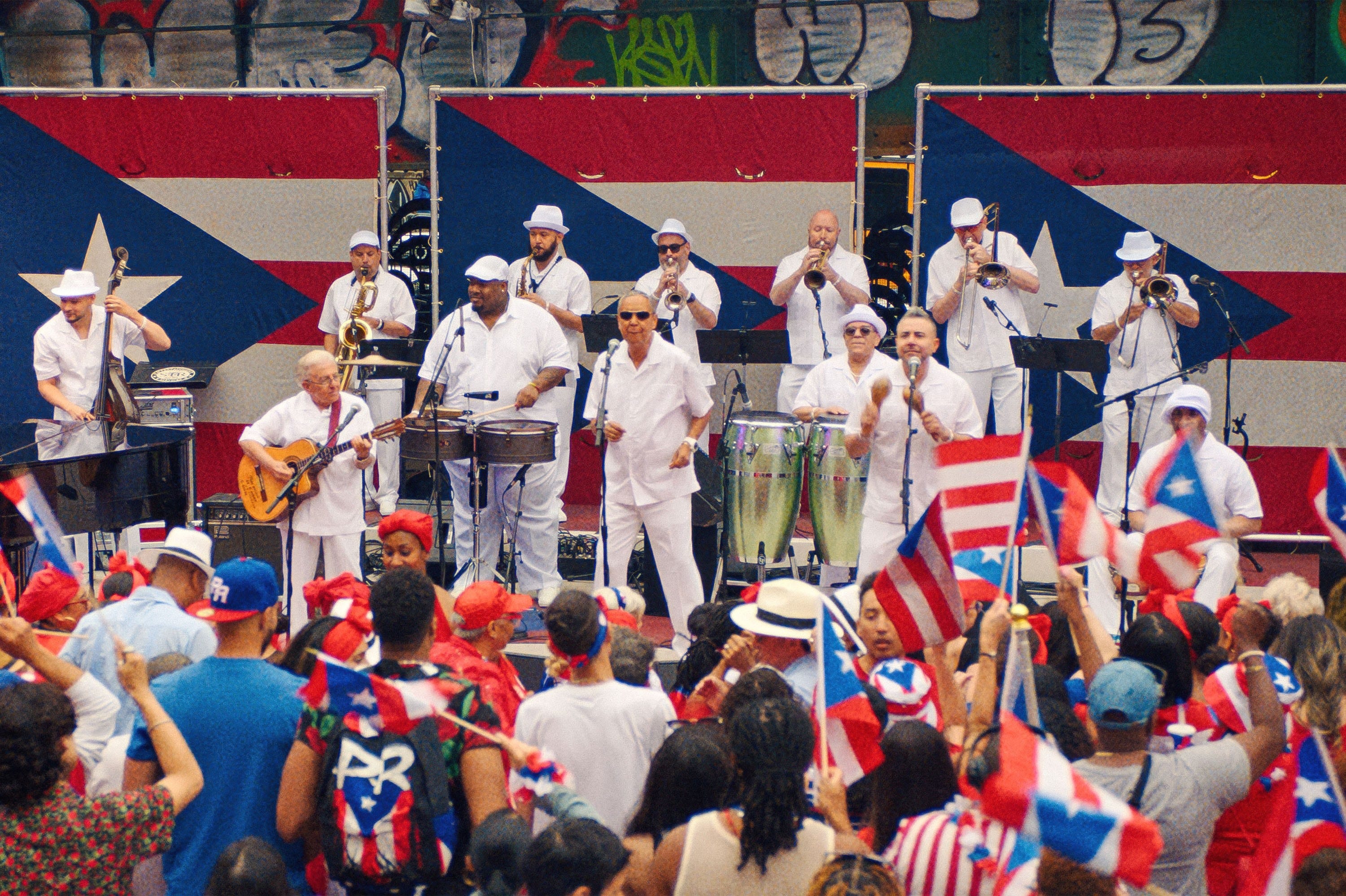
The irony is that the day that looks like chaos on screen—the Puerto Rican Day Parade—was comparatively calm. Jackson set up under the elevated tracks, took a feed from the band’s sound team, and let the city perform itself. The sound department focused on dialogue and ambient texture; a playback mixer handled the complex music routing. “That was actually a surprisingly easy day,” Jackson says.
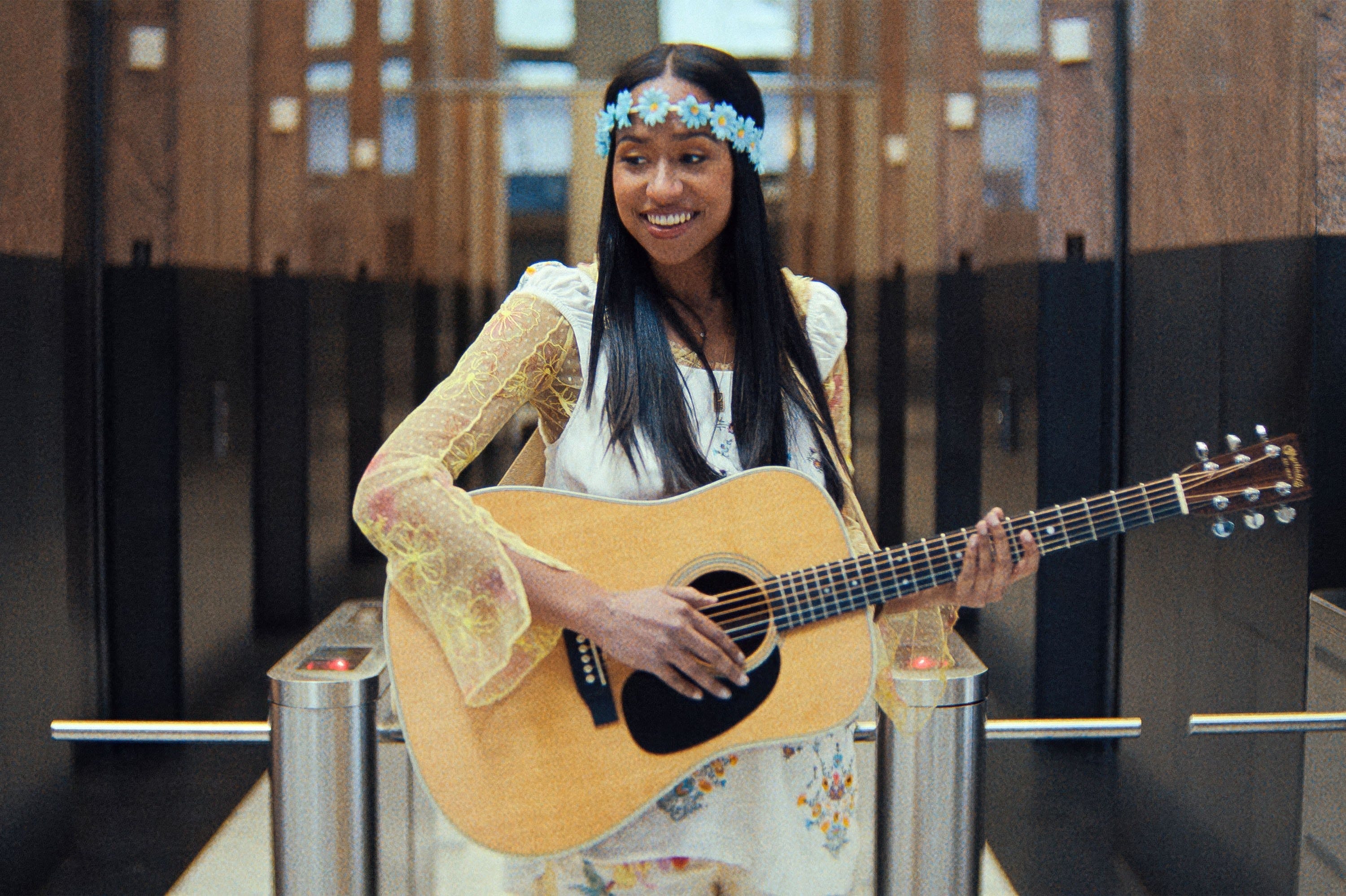
The film also features musical performance, but it never breaks into the hyper-processed sound of prerecorded playback. Instead, the songs were recorded live, an increasingly rare luxury. “If you’re recording dialogue and singing live, it lives in the same world,” Jackson says. A guitarist in an office building is recorded like an actor in a conversation: a microphone inside the guitar, a wireless mic on the performer, and a boom for space and air. “There’s something so raw about watching someone sing in the moment,” she says. “You can’t fake that.”
Through it all, there was at least one constant: A Spike Lee set is a quiet set. “He has a very sensitive ear,” she says. “His sets are quiet. I’ve never been on a quieter set. He demands it, and it’s delivered.”
So no noise. But what is Lee’s ethos when it comes to sound? “Perfection?” Jackson offers with a laugh. “Maybe perfection is his philosophy.”
Allison Jackson’s sound mixer credits include Beasts of the Southern Wild, Causeway, and Archive 81. Her go-to at craft services? “I can’t eat gluten, so there’s a lot of things I can’t eat, but it’s this Bobo’s peanut butter and jelly oat cake thing. Grape, please. Not the strawberry.”

 Meet Me at Crafty
Leave a comment