When editor Brian A. Kates walked into his lunch with director Bill Condon about Kiss of the Spider Woman, he thought he was auditioning. “We don’t call it auditions,” he laughs, “I thought I was having an interview where I would have to campaign to get the part of the editor, which is what you do.” Halfway through, he realized it wasn’t an interview—it was a job offer. “I started to cry. I’ve always wanted to cut a big musical.”
Kates’ résumé was already threaded with near-musicals like Shortbus, Lackawanna Blues, Bessie, projects where song and emotion bleed into one another. But Spider Woman would be something else: a political prisoner recounting the plot of an extravagant, Technicolor musical, replete with fully fledged dance numbers set to a Kander & Ebb score.
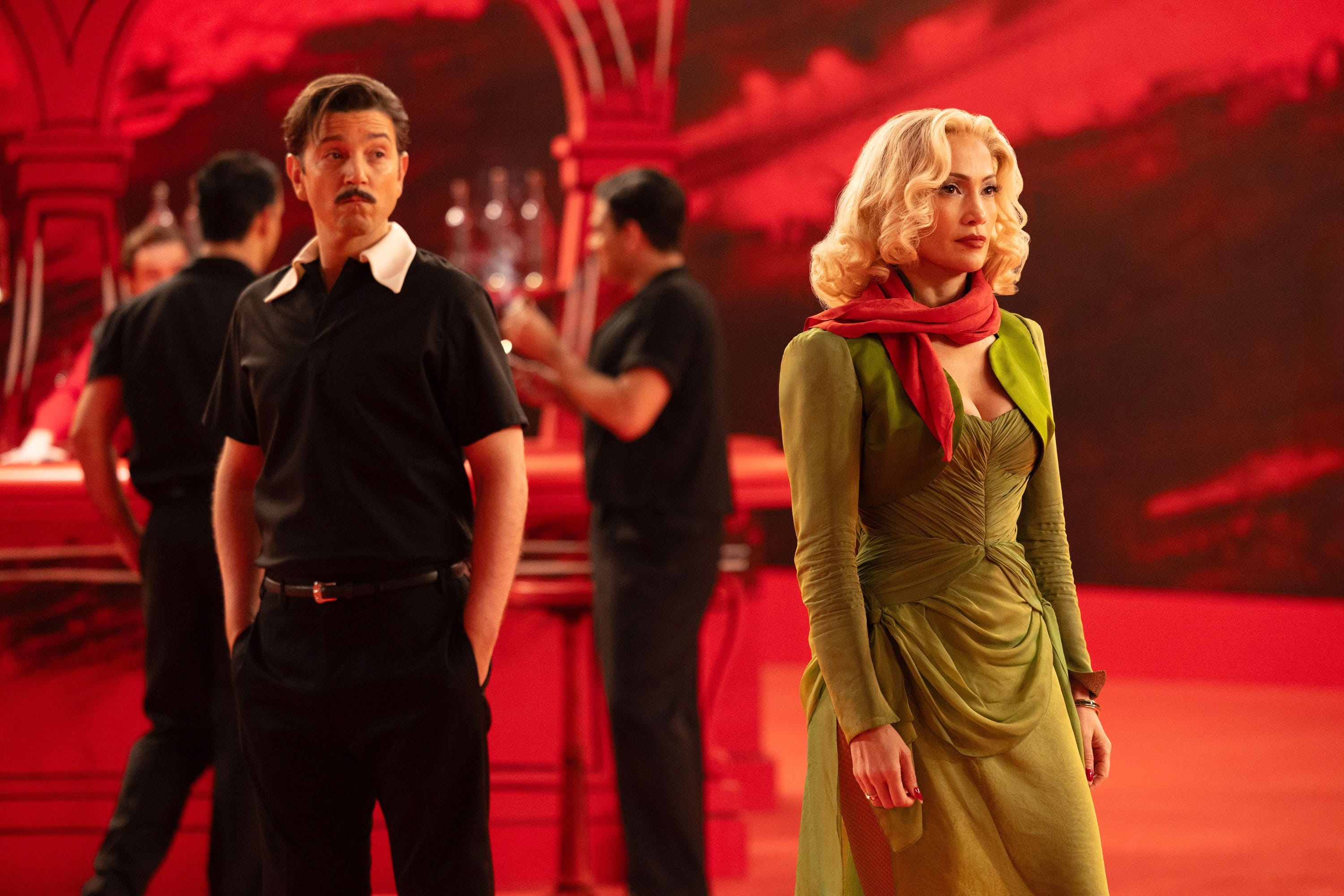
The production schedule was split into two distinct halves. First came the fantasia: 17 whirlwind days in New Jersey, shooting all of Jennifer Lopez’s ‘40s-esque musical numbers. Then the crew relocated to Uruguay for the other half, the oppressive prison sequences between Molina (Tonatiuh) and Valentin (Diego Luna).
For Kates, finding a transition between these two worlds was key. He discovered the bridge in music, experimenting with how Kander’s score could bleed faintly under the prison scenes. “I’d take the Broadway album and change keys, strip vocals, stretch percussion,” he says, then the music department refined his temp tracks.
Dance presented its own tests of precision. “ One of the choreographers, Brandon Bieber, would come in and he would tell me if any of the editing messed up any of the dance steps,” Kates says, pointing out that editing compresses space and time. “But you physically can’t hit the same foot twice. It’s stuff that seems minor to a non-dancer, but to a dancer, it breaks the spell to see that it’s being cut up into something that is not physically possible.”
Moving from the oppressive prison to a world of color and music and fantasy proved to be as challenging. “It was about finding the rhythm,” Kates says. “Finding the right rhythm and playing with the tempo on both sides.”
From there, it was a process of constant refinement. “Bill is extremely thorough, and he goes back and watches all of his dailies and takes notes, and I do a cut. Bill and I and [producer] Greg Yolen work together for several weeks and finesse [the first cut] and restructure it and remove stuff and compress it. Then right before we lock picture, Bill goes home and he takes detailed notes about what’s in the dailies, and we cross-reference and look at a select that he liked. Sometimes that select is exactly the thing that will add something to the scene and make it sparkle. It could be a reaction shot, it could be a different line reading. Sometimes it’s just the audio of a line reading that you put inside the take that is already in the movie. It’s all about what will lift it.”
Brian A. Kates is an ACE and Emmy Award winner whose credits include The Marvelous Mrs. Maisel, Fire Island, and The Big C.

 Meet Me at Crafty
Leave a comment