What could be scarier than a Scott Derrickson horror movie? Shooting one on Super 8.
Not that DP Pär M. Ekberg didn’t know what he was getting himself into when he joined Derrickson’s The Black Phone 2, a sequel to the hit 2022 horror movie. After all, Derrickson’s oeuvre is heavy on the format; he understands the tension from a flickering image with absolutely no sound. There’s a reason Sinister was named the scariest movie of all time by researchers. But still, The Black Phone 2 was on a different level.

“A third of the script was scripted as Super 8,” Ekberg says. “And it was [all] action sequences, sequences with visual effects and special effects and a lot of intricate stuff.”
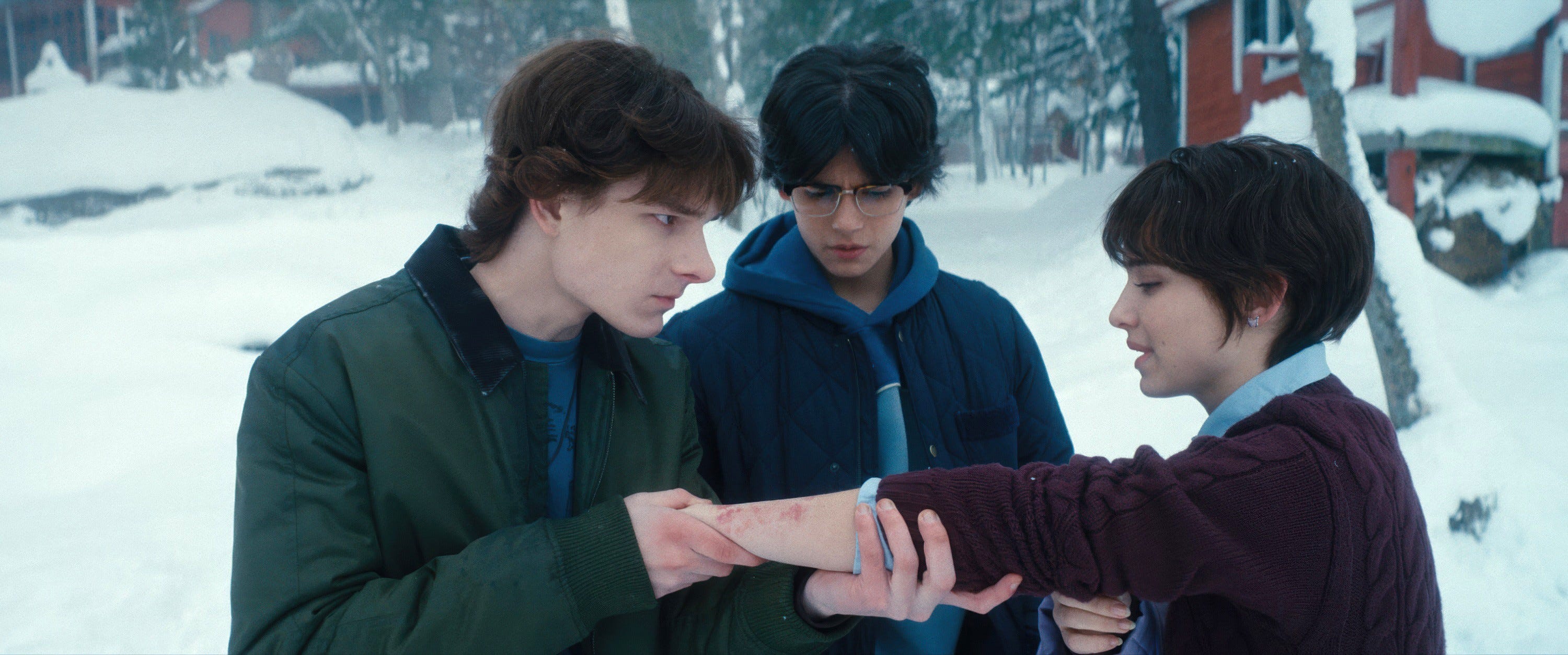
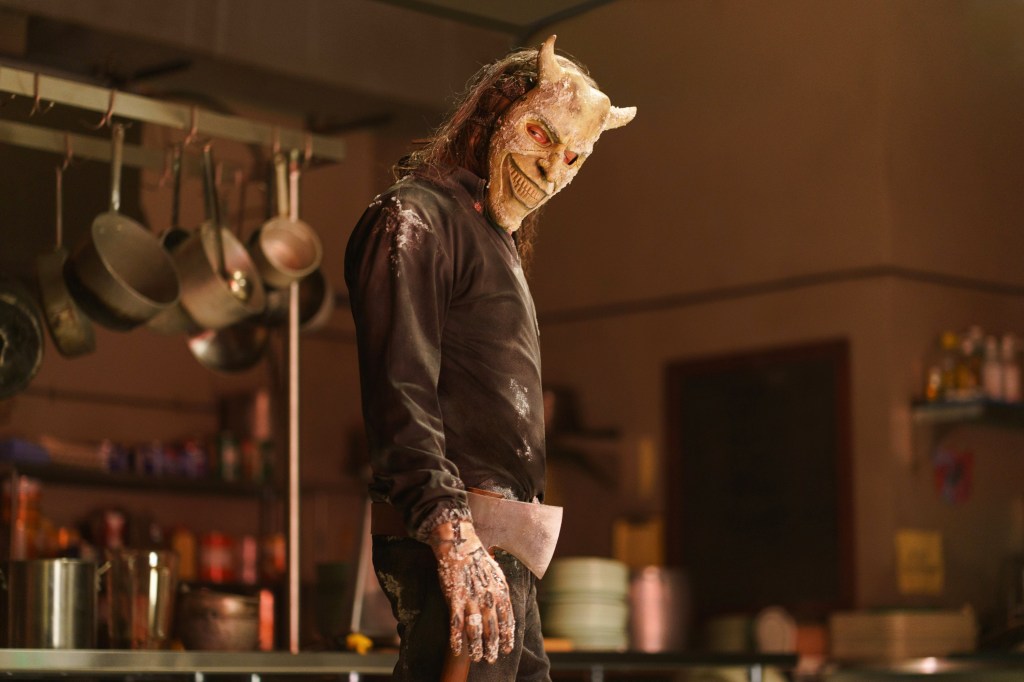
In the sequel, siblings Finn (Mason Thames) and Gwen (Madeleine McGraw) follow clues in her nightmares to a Christian camp where they’re promptly snowed in, while the child-killing The Grabber (Ethan Hawke) returns as a ghostly presence to wreak more havoc. In the tradition of A Nightmare on Elm Street, The Grabber can only materialize in Gwen’s nightmares, all of which are shot on Super 8—including a climactic sequence on a frozen lake. Turns out, The Grabber is an accomplished skater!
But with modern technology, how hard could it be to pull together effects-laden scenes on Super 8? Turns out, pretty hard.
“It’s a super complicated format, first of all,” Ekberg explains. “It’s very sensitive, and also it demands a lot of light to perform properly. These cameras are made to shoot your family on the beach on a sunny afternoon, not night exteriors and night interiors. And you can’t really sync sound. You can’t really show what you’re doing.”
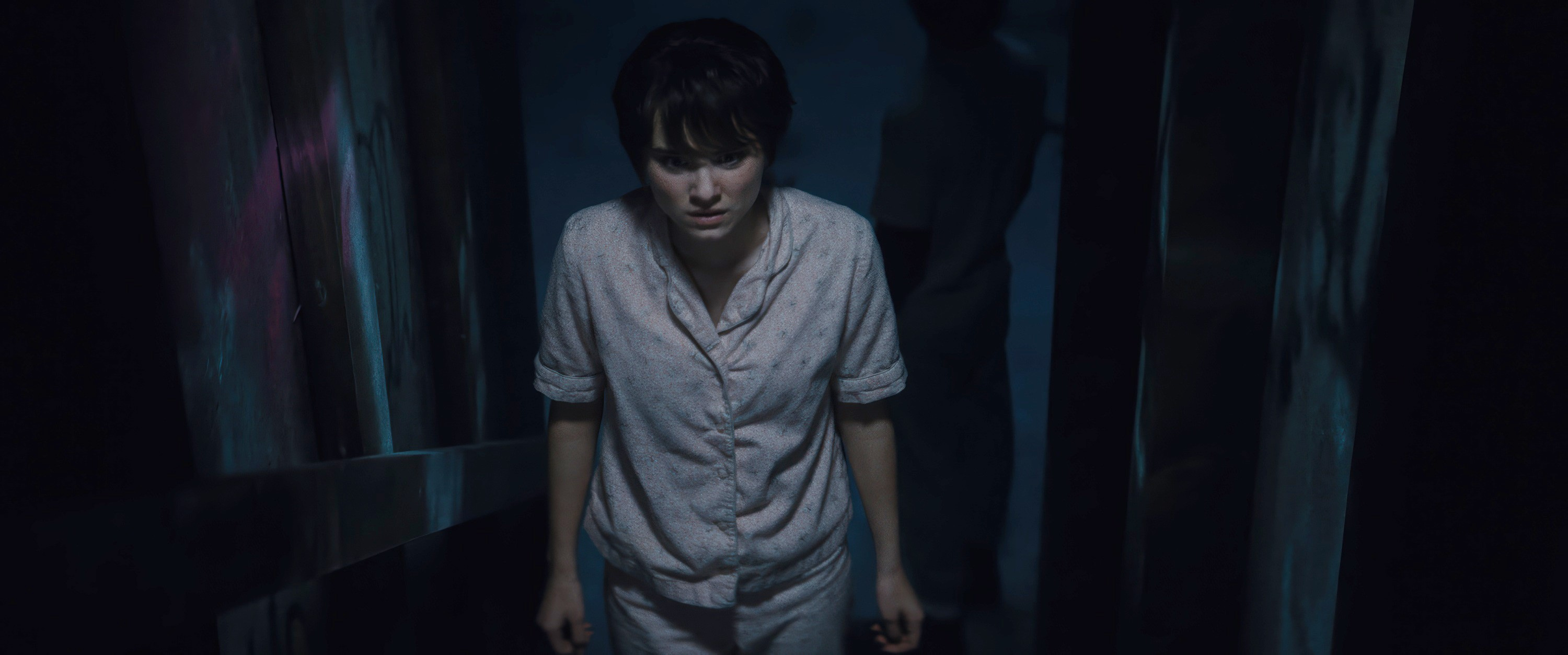
To keep those unpredictable images usable, he and his team invented a hybrid format they dubbed “Super 12”—a punch-in on 16mm that landed between 8 and 16, giving them more resolution while preserving the format’s weirdness.
But Super 8 was always there, recording alongside the safety cameras. As Ekberg points out, there’s something inherently powerful about organic Super 8 footage, even if the same effects could be achieved with a few clicks during post-production. “Some of the stuff, I would deem as unusable if I just saw it,” he says. “But then, when you see it in the edit, it really works. It’s out of focus. It’s weird, and it’s doing shit that feels unnatural. Which is the whole point.”
Meanwhile, Ekberg had to film the other half of the film in the blinding white of a snowy campground. Horror movies rarely make chilliness so haunting, including a battle to the death on that frozen lake. But peek behind the curtain, and you’ll be impressed at how much the actors gave to sell the illusion.
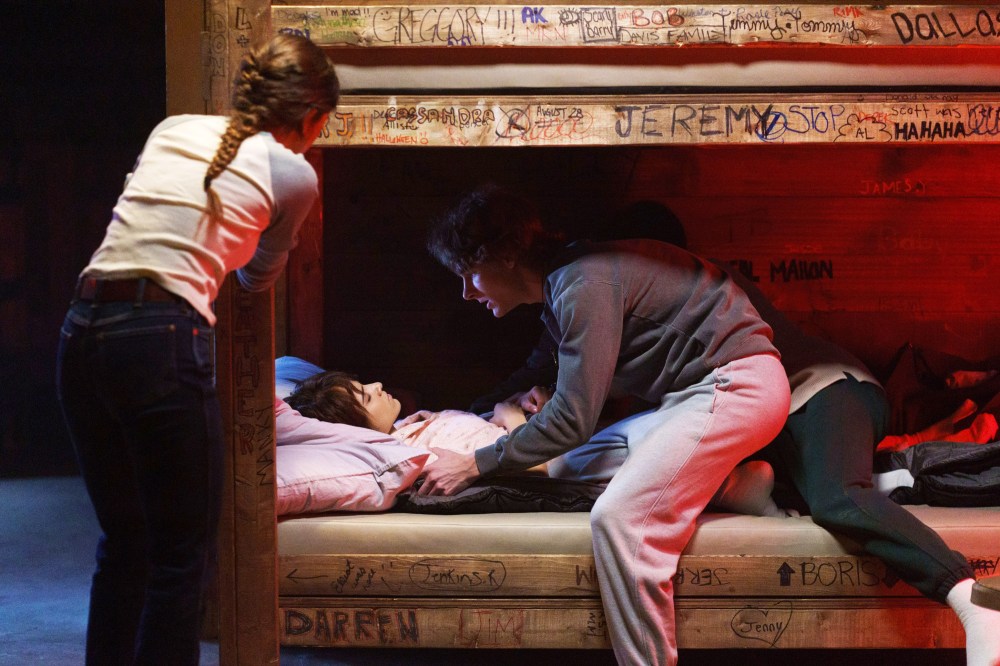
“The ice itself and the snow on the ground and the close background, those were there on the set, and then we have a blue screen where we filled in the Rocky Mountains,” Ekberg says. “And you’re like, ‘Oh, it’s not cold. We are actually on stage. It’s nothing scary here. I have full control over the lights.’ So it’s essential for me to keep the vision intact, even when there are so many bits and pieces missing in-camera. You have to be able to see past that to keep the storyline and the visual parameters.”
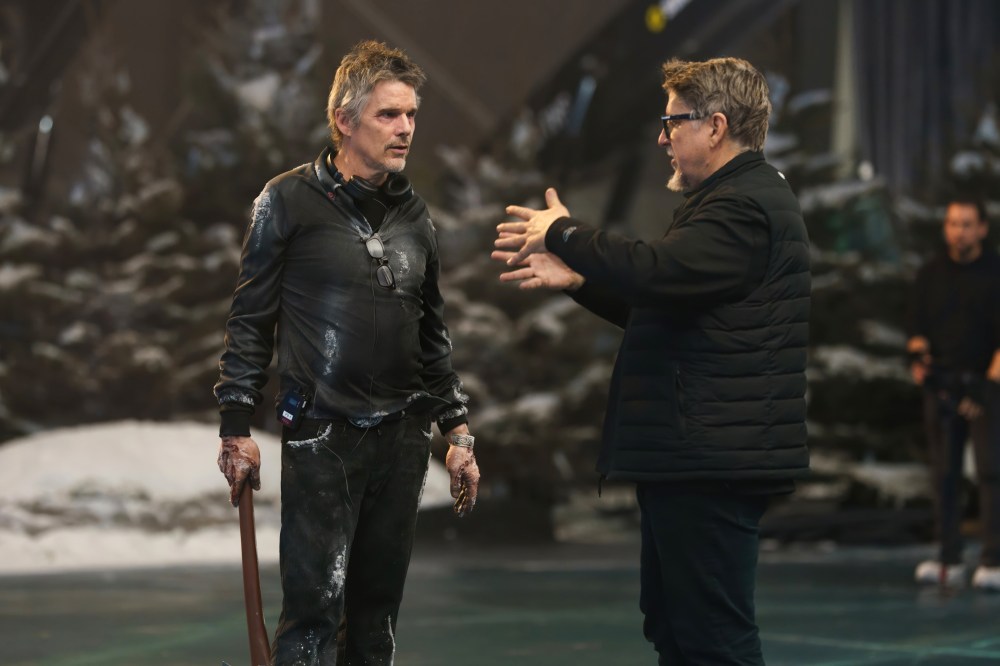
The finale was a massive undertaking that included the entire cast (plus some horses), not to mention that most of it was shot on film, and they had to wait out a full week of processing to see what they’d captured. Ekberg credits Derrickson for keeping things on track. “It took quite a while to figure out, ‘OK, what is the order? Where are they going? What is happening? Who sees who and when?’ There’s so many layers, but with his vision, we were able to break it down into understandable pieces and keep track of what was going on, even though we didn’t shoot it in any sort of order.”
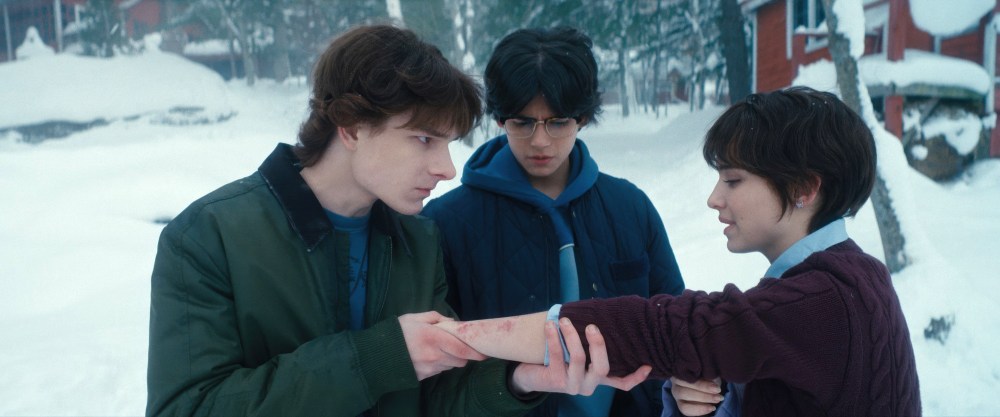
Part of Ekberg’s successful toolkit was the Sony Venice 2, which allowed for nuance in the all-white expanse of snow. “It has a very nice roll off in the highlights, and you get a lot of texture out of the white. It has a lot of color definition, and you see all the little shadows, the little shades. Snow is rarely just white. And I felt like we were actually able to see all that, which made it a little bit more interesting.”
And also ever so subtly unsettling, especially considering we have some inkling of what lies beneath.
Pär M. Ekberg is a cinematographer whose credits include ABBA Voyage, Lemonade, and Slingshot. His go-to at craft services? “Black coffee. I skip all the snacks. There’s no more snacks in my life. I overused craft service for so many years!”
 Meet Me at Crafty
Leave a comment