Here’s the thing about A Big Bold Beautiful Journey: It is as heightened as any of the emotionally lush MGM musicals from which it borrows aesthetically, not to mention the long shadow cast by The Umbrellas of Cherbourg (and not just because of all the rain). Margot Robbie and Colin Farrell star as two strangers whose rental cars lead them into a very strange world of doorways into their pasts, where they are forced to confront and embrace who they were and what they came from, all while revealing their best and worst selves to one another.
I sobbed off and on for a full week after seeing it.
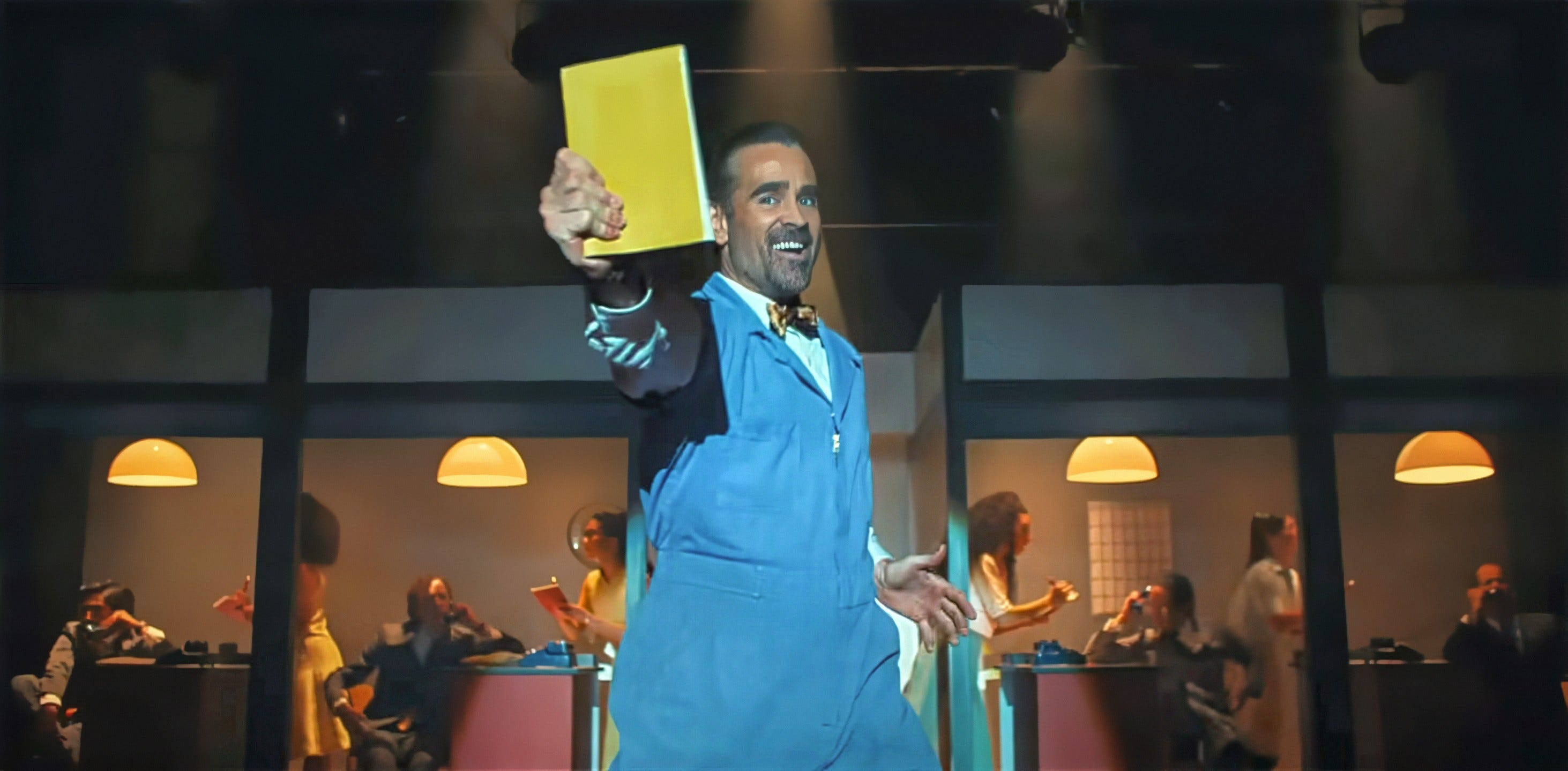
When it comes to what we’re hearing, there’s something special going on (and not just Farrell delivering an all-out musical comedy performance in a high school production of How to Succeed in Business Without Really Trying, of all things). The sound is dense with life, with rain, and with movie stars delivering the kind of heart-on-the-sleeve romanticism that seemed destined solely for Taylor Swift albums and TCM. Sound mixer Douglas Axtell watched the film coming together on set, and he can attest: It was just as moving in person as it is on the screen.
He talked to Crafty about working on this, plus his wildly successful career on everything from Heathers to Batman and Robin and more.
From the very beginning of A Big Bold Beautiful Journey, we’re primed to pay attention to what we’re hearing. The first sound we hear is the Columbia Pictures theme bleeding into a honking car horn. When did that idea pop up among the team?
Douglas Axtell: That one was really sound design, that’s where they shine. It might have even been Kogonada, our director, because he’s so good with sound. Susan [E. Kim], our editor, is also incredible. Those kinds of choices are very much filmmaker choices.
Working with a director who’s so strong with sound—what’s that like?
It’s not always the case. Some directors want you fully involved, others don’t want to hear a word. David Lynch, for example, wanted me sitting right next to him—if I moved 10 feet away, he’d ask, “Where are you, Douglas?” [laughs] With Kogonada, it was calm, meticulous, precise. That’s rare. The whole process was peaceful, which I think speaks to the kind of filmmaker he is.
What conversations did you have about the sound for this movie? It’s a heightened experience.
We didn’t really sit down with, “Here’s exactly what we’re going to do.” His approach was more, “You’re the sound person, I trust you.” That trust was wonderful—it freed me to just make the movie. The cast was collaborative and ego-free, even with stars coming off huge projects. It was a beautiful journey for all of us.
Speaking of beautiful—the How to Succeed in Business Without Really Trying sequence. As if Colin Farrell couldn’t get sexier. That wasn’t recorded live, right?
The music wasn’t, but we did capture dialogue portions live. The surprise was Colin, because none of us really knew him as a singer or dancer. Then he got up and did it, and our jaws hit the floor. He was incredible. Even unscripted things, like them dancing down the hallway at the end of the day? I don’t know if that was planned. That was like the last shot of the day, and that got set up and the first time they did it, they came dancing and jumping down the hallway. I don’t know, it was magical. A lot of the filming was like that.
They’re both actors who balance comedy and drama so well. Real movie stars.
That’s so true. They are movie stars. You don’t really imagine the subtleties until they do it. And then you’re like, “Wow, that was really a special little moment that they brought.” It was a very special thing.
Over the course of a film, does your process adapt as you get to know the actors and how they work?
Definitely. My philosophy is: support the performance, support the director’s vision. Some sound mixers come in with rigid preconceptions, but filmmaking is about collaboration. With filmmakers who are artists, you have to support their vision, however unusual it seems. And it’s true with all artists, we have to support their vision, their ideas, and their movie. And that’s how I approach it.
Does that stem from working with Wim Wenders so early in your career on Paris, Texas? That must have been formative.
I was so young, and Wim shot that film in sequence. Scene one and then scene two, then get in a van and drive to Texas. Scene three, shoot in a little motel and drive to Houston. Scene four, back to L.A. in a van. Scene seven. Claire Denis, who’s a great director now, she was the first AD. All these amazing people. Robby Müller. Agnes Godard, who was Godard’s daughter. I just learned that, OK, this is clearly an artist. That was the approach that I fell in love with, filmmaking and the original voice of an artist, and that’s what I’ve tried to find. And that’s why I’ve hopped around because if an opportunity presents itself, I’m like, “Oh, I love that filmmaker. I really wanna work with them.”
You’ve worked with some of the biggest auteurs of the last 40 years, it’s a crazy list of credits. But as a gay man of a certain age, there is one title I have to ask about: What was sound mixing on Heathers like?
Heathers was very much like this film, in a weird way. [Director] Michael Lehman was very young and ebullient and excitable, and there was a sense that we’re all in this together. We’re all making this together, and it’s not an ego thing, so let’s have fun. And I think Big Bold Beautiful Journey is the same thing.
Was this movie already as emotionally potent on set, before post-production?
Yes. Even without the strings—which, let’s be honest, are killers—the chemistry was undeniable. You could feel it while filming. That’s rare.
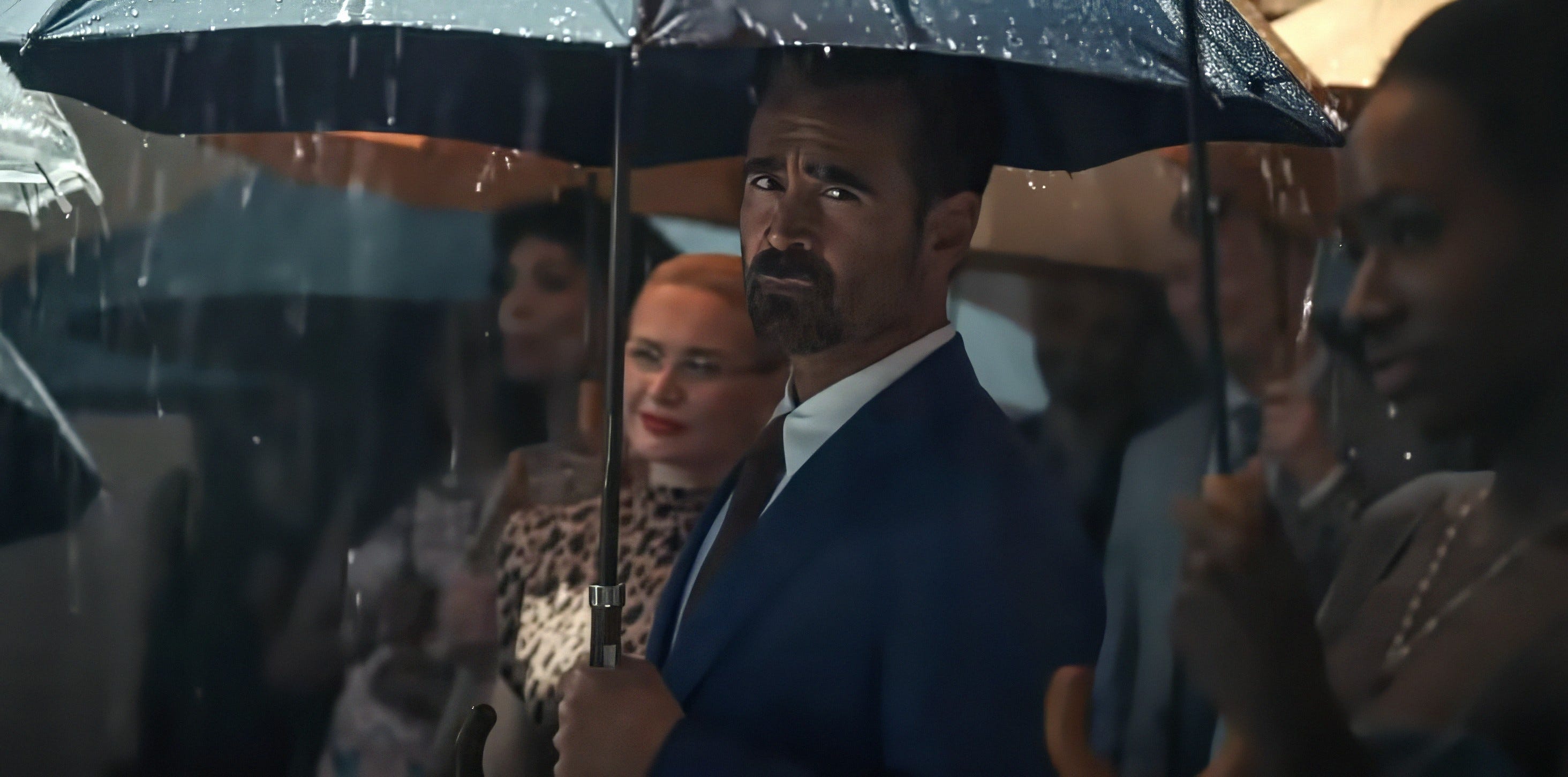
And then you had to deal with that third character: the rain.
I was gonna bring up that rain as the third character! Yes, it was not part of the collaborative spirit, always trying to spoil the scene. We had to have a lot of talks with that character and say we need you to just sit down and just be there and not be quite so noisy. That was one of the challenges, and I knew it going in. That and the Saturn.
The car that they’re driving?
“A classic American car.” Yes. That was another challenge, because it squeaked like mad. This was not the best-made vehicle in the country. Not our top moment there on that one. They would be sitting there in the car, and you’d hear something squeaking, horribly loud, and it’s the seats or it’s the armrest. It’s just a squeaker. We had to go in and like tape and glue and all this stuff. It was the inanimate objects that were the problem. The humans were fine for once, but the other things were the ones giving us problems.
I also want to thank my sound crew. Gunnar Walter was my boom operator. And Natasha Fagan was our sound utility, and [sound playback] Jeff Zimmerman was our special music guru who did all the crazy music and the moving cars and stuff. We had a great team, and we had a lot of fun.
Douglas Axtell is an Emmy-winning and CAS-nominated sound mixer whose credits read like a best-of list for the last 40 years. Among his many credits are Dirty Dancing, Alias, Twin Peaks, The Truth About Cats and Dogs, and the Joel Schumacher Batman movies. His go-to at craft services? “I’m very picky at craft services. I’m not like just going right to the donuts. I’m not going right to the candy. My go-to, at least in the past seven years, is to get things for my young son, and I load up.”
![A fast food burger lunch in A Big Bold Beautiful Journey [Sony Pictures Releasing]](https://meetmeatcrafty.com/wp-content/uploads/2025/10/5eedd574-f35f-483e-94df-49416f1859bd_2929x1444.webp?w=1024)
 Meet Me at Crafty
Leave a comment