Welcome to the wild and wonderful era of Emmy Awards: Phase 1, a time before nomination voting when the arbitrary rules governing what is timely are set aside, and we can discuss projects that were released weeks or months earlier and deserve to be top of mind again. Dying for Sex premiered on FX April 4.
Jon Higgins was always meant to work on Dying for Sex. That sounds a little kooky-mystical (I love L.A., but I’m not quite that L.A.), but coincidences do pile up as he talks about editing the first and sixth episodes of the FX dramedy about sex, friendship, and death. Beginning with what he was listening to when he first learned about the editing job.
“Before anybody reached out to me, I had just started listening to the podcast [which the show adapts], which is weird,” Higgins says. “It just showed up on my feed, and I was like, ‘Oh, what’s this?’” He pauses, because he is also not that L.A. “I don’t know, it’s probably some algorithmic security thing that was like, ‘Hey, this is popping up in your agency email and we’re gonna send it to you.’ So who knows?”
Meet Me at Crafty is reader-supported (for now!). So please consider becoming a paid subscriber—but free subscribers also mean the world to us! As do those who forward us. We’re pretty forward ourselves.
No matter how it happened, he was already well poised to tackle the challenge of estabishing the tone of Elizabeth Meriwether and Kim Rosenstock’s series, in which Michelle Williams’ Molly (based on Molly Kochan) receives a Stage 4 cancer diagnosis, leaves her husband, leans on her best friend, and puts one solitary thing on her bucket list: have an orgasm with another person. Higgins edited Search Party, itself a tonal tightrope, as well as more conventional work on shows like Emily in Paris, Younger, and Uncoupled, but editing the first episode of Dying for Sex turned out to be a more complicated process than anyone expected.
Comparing editing the dailies to someone bringing over color swatches to decide what to paint your living room, Higgins found himself trying to balance a lot of heavy stuff (Molly’s cancer, leaving her husband) with the comedy that forms the core of the show and her friendship with Nikki (Jenny Slate). The show only gets darker from Episode 1, but everything has to be there from the start.
“My first cut was probably more skewed towards a dramedy than a comedy,” Higgins says. “Then we discussed, as far as the series arc, in the beginning let’s really set the tone as a comedy, because the heavy stuff happens later [in the season]. We don’t wanna turn people off in the beginning.”
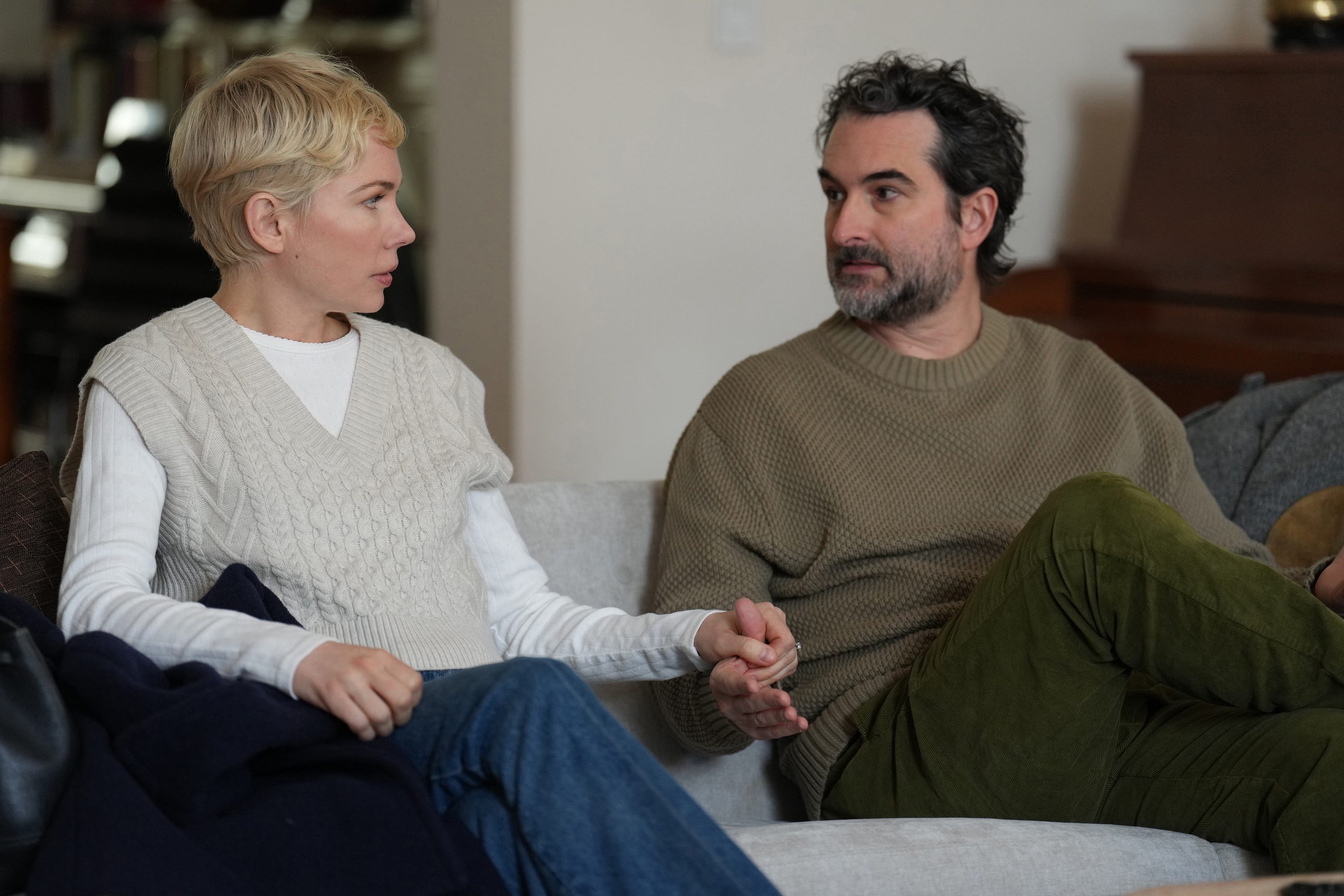
That culminates in a scene between Molly and Nikki outside the hospital where their new reality sinks in, and their grief is undercut by the indignities of life in New York City. Before that, Dying for Sex ranges from a torturous marriage counseling session to the world’s saddest blowjob and a very public breakdown outside of a bodega.
Higgins was also responsible for editing Episode 6, “Happy Holidays,” in which Molly and Nikki face the holidays, Molly finally confronts the trauma of her childhood, and she ends the episode collapsing on the street and professing her love to Rob Delaney’s Neighbor Guy. The comedy is still present, but for the first time it’s shot through with a real, visceral sense of Molly’s mortality; perhaps no scene is more representative of Dying for Sex than the one in which Molly acts out by disaffectedly giving a handjob on New Year’s Eve—and then her hand goes numb, she panics, and the guy petulantly asks how much longer she’s gonna need because, “I’m still hard.”
That episode also sees Molly confronting the trauma of her past in group therapy—but though she has written about her childhood abuse, she can’t perform the interpretative dance to her words that her counselor gently asks her to. Later, after she realizes that running away from happiness won’t make dying any easier, she can finally perform that dance in a quiet and tender moment of healing.
The episode eloquently and elegantly sets up what will happen in the final two, as Molly begins the process of dying in earnest (but sans solemnity). And the episode had particular resonance for Higgins.
“I wasn’t sure if I wanted to talk about this in a public space, but considering the two main characters are real-life people, how could I not?” he says. “My mom was passing away when I was working on this. I was literally cutting Episode 6 from hospice at times—I really do love the laughing and crying at the same time [feeling]. There were so many parallels between this show and that experience. At one point, my mom in hospice was like, ‘What’s taking so long? Let’s get the show on the road.’ And that happens in the show. And then they had the talk about what to expect in hospice, and I was like, ‘Wow, what is happening right now?’ It was almost shepherding me through it a little bit. It was weirdly comforting.”
Higgins hurries to add that no one ordered him to continue working during this time, which is exactly the kind of detail that elicits the laughter-through-tears reaction that suffuses the show. And ultimately, it’s Episode 6 that he’s submitting for Emmy Award consideration.
“I just love [Molly’s therapy] dance,” he says. “Her dance is almost rejoining her body. You see this person going on this journey mentally and with their soul while their body’s failing, and it’s almost like they just made up. And I just love that.”
The episode also gives its Molly a moment the real one never had. “I heard the real-life Nikki talking about it, and the end of Episode 6, she said, was the hardest for her to watch because the real-life Molly never had the guy to say ‘I love you’ to,” Higgins says. “That moment when she’s lying on the ground and she says, ‘I love you. I love you,’ that ripped [Nikki] up. So there’s a lot of human elements in there, [and] that’s why I decided to submit that one.”
Jon Higgins’ credits include Search Party, At Home With Amy Sedaris, and the Sundance Award-winning Your Monster. (As always, this partial list of credits is indicative of nothing but my own idiosyncratic tastes.)

 Meet Me at Crafty
Leave a comment