Welcome to the wild and wonderful era of Emmy Awards: Phase 1, a time before nomination voting when the arbitrary rules governing what is timely are set aside, and we can discuss projects that were released weeks or months earlier and deserve to be top of mind again. Chimp Crazy premiered August 18, 2024, on HBO.
This is true of everything we cover at Meet Met at Crafty, but for HBO’s Chimp Crazy, I feel compelled to say it flat out: Watch it. Your appreciation for the deftness of what these five editors—Evan Wise, Charles Divak, Adrienne Gits, Doug Abel, and Sascha Stanton-Craven—accomplish will deepen after you stream the four episodes on Max.
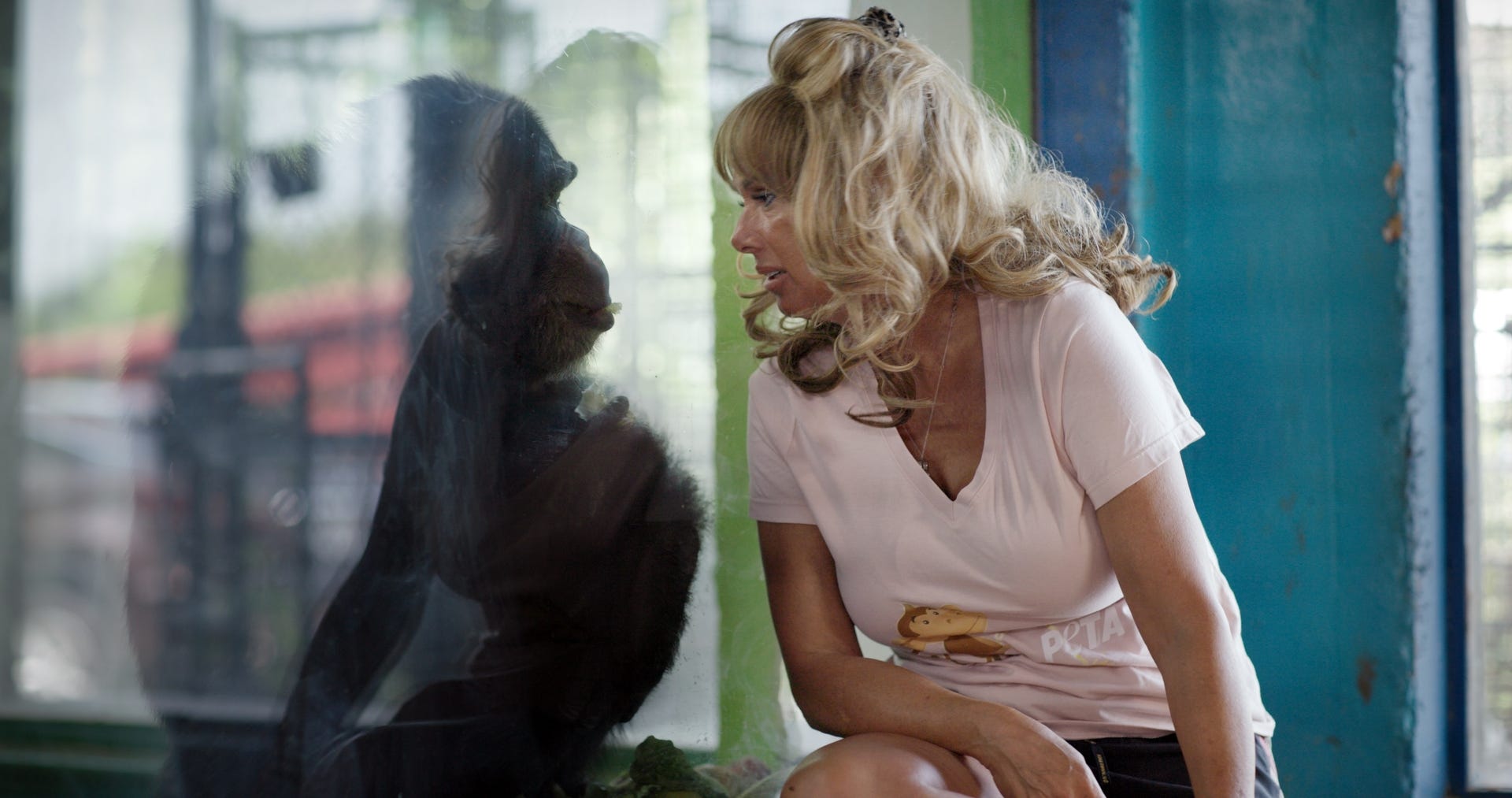
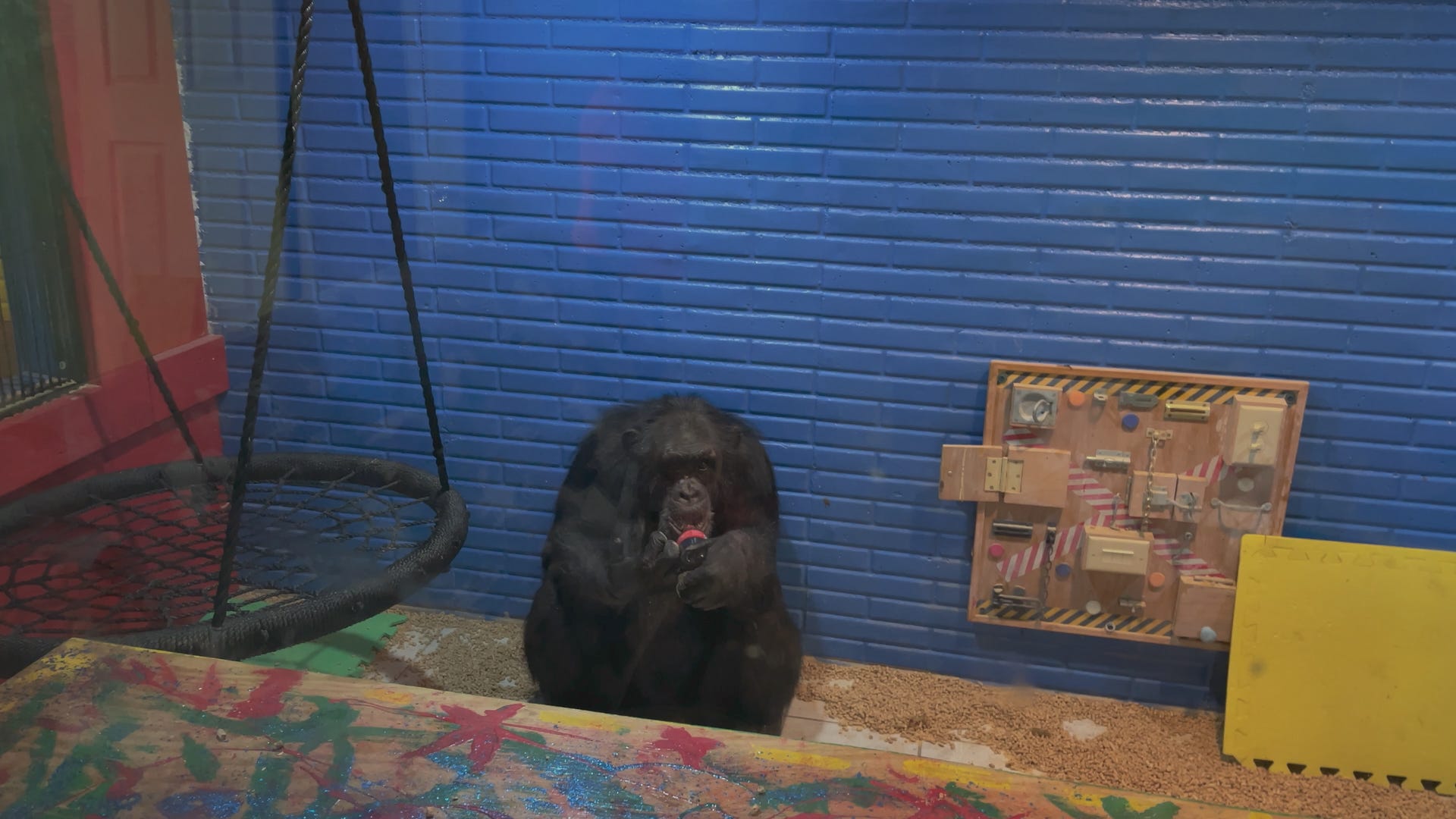
When the announcement came that Eric Goode, the director behind Tiger King, was following that zeitgeist-defining smash with a limited docuseries called Chimp Crazy, the natural question was, “Can lightning strike twice?” The answer was a resounding yes, as the documentary he and his team set out to capture became a true crime story in which the production itself became entangled. Not to mention a character for the ages in Tonia Haddix, a woman of a certain age who really loves former movie star chimp Tonka—and really hates PETA.
Her story and that of Tonka (with occasional guest appearances by Alan Cumming, of all people) is at the center of a series that also examines the perils of chimp ownership with grisly true stories that feel like foreshadowing of what could happen to Tonia. (That she now has an Instagram account called @chimpcrazylady with a link to her booking manager is a direct result of Chimp Crazy.)
All of which is a lot for even a team of five editors to tackle. The docuseries balances journalistic ethics with showmanship, an unreliable narrator with news stories and bodycam footage, and a definite sense of humor with tragedy on an unimaginable scale. Not to mention a resolute refusal to force-feed audiences how to feel. It’s a balancing act rendered so seamlessly that it’s almost invisible.
So is it any wonder that during our Zoom call, Wise proudly brought up the team’s ACE Eddie Award win for Best Documentary Series? “I’m still freaking out about it,” he says. “It was just the best thing that ever happened. To be recognized by our peers and to achieve that is just a lifelong goal, I think, for everyone.”
The following interview has been edited and condensed.
The editing balances and gives such shape to this—and I know they filmed for years without anyone looking at footage or assembling a rough cut. At what point did all of you become involved?
Evan Wise: I was the first one on. I started probably after a year and a half of filming, in July of 2022. In the beginning, I was just cutting anything that caught my eye because there wasn’t a plan. So it was trying to get a sense of what might be here. And then as I would go along, I would cut random scenes that I thought were cool or that spoke to me. But you can only do that for so long, and you realize that you need a lot more people. And then Chuck came on.
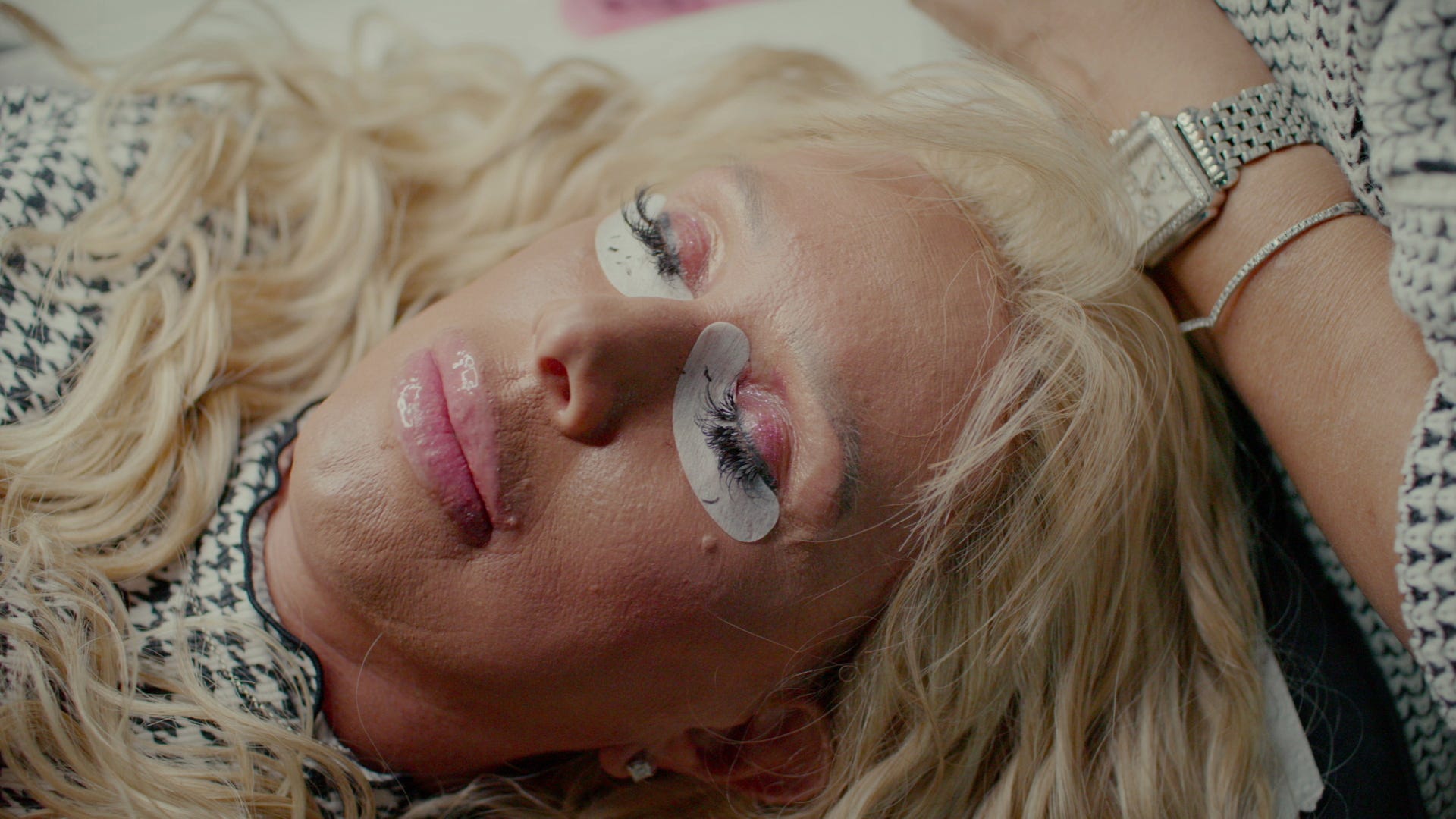
Charles Divak: The first thing I cut was the cold open for Episode 2, which was Tonia’s lip injection scene. I remember watching that and being like, “This is so weird. It’s just bizarre and dark.” And as soon as I saw it, I was like, “This could be a really cool cold open.” Because it resets what’s going on, and it does it in this non-intrusive way where you’re getting information without really knowing it. And it’s entertaining at the same time. That was the first thing I did. Then I ended up working on Episode 2, and I think Doug was consulting at the time.
Doug Abel: I had worked with Goode Films on Tiger King, which was, on and off, five years of my life. And I had been flirting with this Chimp Crazy project, which had a different name at the time. There were already parts of episodes put together, with varying degrees of success, but you could clearly see a lot of potential there. But it was also really daunting and confusing exactly how to proceed. And then I think Adrienne joined us shortly thereafter, right?
Adrienne Gits: I was gonna be working on Pendleton [the story of Buck the chimp that unfolded in Pendleton, Oregon], but it wasn’t necessarily Episode 3 yet. Nobody was really sure where it was gonna fit in or how. And then I think Evan, you were like, “Why don’t you just do [all of] Episode 3?”
Evan Wise: And in the middle of all that, we were wildly inundated with footage. I think it was 1,500 hours total, not including archival. Because of that, we had Sascha come in somewhere in the middle to just help bail out the ship.
Sascha Stanton-Craven: It was like March 2023. Carissa [Ridgeway], one of the producers, emailed me and was like, “Hi. I’ve just been looking around at IMDb for people. Would you be interested in coming in?” And so I came on without really knowing what the project was, and found these four episodes that were starting to be built. I was just like, “Oh my God, I can’t believe that they were here for this.” It was a nice give-and-take process. I was doing a lot of Easter egg hunting, basically.
Meet Me at Crafty is reader-supported (for now!). So please consider becoming a paid subscriber—but free subscribers mean the world to us, too! As do those who forward us. We’re pretty forward ourselves.
Because all of you were working on separate episodes, what were the conversations like in terms of how to portray Tonia? There’s so much footage of her in different modes. How did you balance them all?
Charles Divak: A lot of that is trial and error. You don’t wanna feel icky about her, right? You have to try to make her a full-fledged person, which she is. You don’t wanna make her this cardboard cutout. So you take the scenes where she’s in her environment and try to expose her personality as much as you can, but then try to show other shapes of her. But you don’t really know what you’ve done until you watch the episodes together and see how it feels. And then you can pull back from there or add more.
Evan Wise: One of the things that happened organically is that we all experienced Tonia in the same way initially, and then all hit the same checkpoints along the road with her, where our opinions about her changed. And I think that is how we wanted the audience to feel about her, too. In the beginning, it’s just total curiosity. You can’t look away. And then you realize some of the intricacies of what she does, and you’re like, “Oh, this is not great, this is bad, but I still like her.” And then you learn more about her backstory, and oh wow, she’s a really giving person, and she’s a natural caregiver. And maybe some of that energy is misplaced, but she comes from a true place in her heart. And then by the end, you’re like, “Man, I feel sad that this is happening to her because she did this to herself.”
Doug Abel: I don’t think anybody doubts that Tonia was sincerely in love with Tonka, at least in her own way. But how many movies are there where it’s about a relationship and you, as a viewer, can see this is not gonna end well, but the participants have a different take on it? So I think that was a redeeming quality. Even if you didn’t like Tonia, and I was perhaps in that camp, you could still see where she was coming from. So I think as long as we kept that going in a sincere way, the audience was gonna stay with us.
How did you manage not giving the audience more information than they need in the moment in terms of how this is going to play out?
Evan Wise: There was a lot of conversation about the end of Episode 1, because it’s handing it up to the audience: “Hey, what do you think happened?” It was my hope that everybody would think that she took Tonka because that makes it interesting. And then in Episode 2, which Chuck could speak to better, we try to throw some mist on that and make it like, “Oh, did she or didn’t she?”
Charles Divak: Yeah, I think Episode 2, I was trying to mine all the material that made it confusing. Specifically in the cold open, she says exactly where Tonka is: “Do you think he’s in my basement? That’s crazy.” Because she says that, it throws you off. But at the same time, you’re suspicious because she’s an odd person and she’s clearly hiding something. And then when you get to Episode 3, it’s all laid out for you.
Adrienne Gits: We knew going into Episode 3, the end was gonna be [the production team] turning her into PETA, and so it was just working towards that. And then, 3 was a lot of backfill and getting to know Tonia. That seemed like a good time, after you maybe have decided that you don’t like her, to give a little bit of a twist: Actually, she is this very caring person and a natural caregiver, and maybe there is some redemptive qualities in there. And then, of course, learning about everything you didn’t know happened in Episode 2. You get the whole story of how she kidnapped Tonka. So it was just building towards that.
Doug Abel: There’s also something fun when you learn that your main character is an unreliable source of information. Think about The Jinx. Part of the tension is, “Wait a minute, is this person lying? Are they fooling themselves?” You can see her brain turning sometimes when she’s confronted in a certain way. And then as you learn more and more, there’s a certain amount of fun. And even if you know the information or suspect strongly, seeing how your character navigates that is inherently its own thing. And so I think we exploited that quite a bit.
Sascha Stanton-Craven: She’s a compelling enough character that whatever she’s doing, you just want to see her do it. How is she going to do it, and how is she going to represent it to us, and how do we understand the overlap and the disparity in those things? Part of what the show does well, and what impressed me when I first came onto it, was that you have her as the central spine, but her story naturally dovetails out into all these larger ideas about private chimp ownership.
When you were finally able to sit and watch all four episodes, no matter how rough they were, what did you realize you needed to adjust?
Sascha Stanton-Craven: The first thing for me was understanding the involvement of the production itself [on camera]. Because the production was so involved with the PETA connection, that had to be set up and threaded through in some way. I was just poking around with a lot of that stuff to try to make that a consistent thread, so it wasn’t like we set it up in the beginning and then it’s gone for two episodes and then comes back in the fourth episode when everything comes to a head. Then sometimes it’s things that you just get so set on going here and then it moves two episodes later or one episode earlier, and you’re like, “Oh, of course. Now it makes total sense.”
Doug Abel: There was an effort made by the producers to get us all together for a solid week and a half, and that was when we, as a group, sat down and watched all four. And it was really eye-opening and amazing. That was a milestone moment for sure. I think anybody who’s an editor, you sit at home and you think, “Ah, I did a great job on this cut.” And then as soon as you have another person or even a dog in the room, you suddenly feel like, oh, maybe that could be better.
Evan Wise: The duration and the depth of the Travis story [about the chimp in Stanford who mauled Charla Nash in 2009] in Episode 2 changed a lot. And I remember there was a point in Episode 4 where we were playing Tonia as more defiant after receiving the $250,000 letter from PETA. And then we realized, oh, this is actually the beginning of her descent. And we began to treat it like that rather than just sheer Tonia-esque defiance.
As all of you joined, what was the biggest what the fuck moment as you’re looking at the footage? What took you most by surprise?
Evan Wise: When Jeremy [McBride], the executive producer, was pitching the show to me, he was like, “Yeah, she had the chimp in the basement, and we’re filming her in the basement with the chimp.” And I genuinely didn’t understand what he was talking about. And then when I signed up, that was the first thing that I went to watch, and I was like, “I cannot believe this is happening. And that we were able to film it!”
Adrienne Gits: I didn’t know what the show was about at all. I didn’t even know what network it was for. I remember thinking, “Is this for the Discovery Channel?” And Jeremy was like, “I’m gonna send you something.” And he sent me the Zoom [trial]. So I had no idea about the basement until I saw her go down, and I could not believe it. And I instantly quit the show I was on, and I was like, yes, I wanna work on this. Can I start? But yeah, I remember just, out loud, I was like, “What?”
That must be such an amazing place to edit from, where you’ve experienced it.
Adrienne Gits: There was a bunch of stuff like that. The chimp attack [of Tonia] at the end of Episode 4… I had to sit down.
Evan Wise: That was the biggest shock. I think we all thought that was very likely to happen, but we didn’t realize that it would happen within the timeline of us editing the show. And when I got the call that Tonia had gotten bit, I was not surprised at all, but my jaw was still on the floor.
Sascha Stanton-Craven: I had jumped off the show by that point for another job, and just met up with Evan, and Evan was like, “So we have a new ending for the show now.” There had been a full ending in place already.
Doug Abel: It was gonna end at the chimp sanctuary with Alan. Big crane shot up, happy ending. And here comes the coda. But I remember being really shocked by two things. One was the fast food that Tonia was feeding the chimps. It had never occurred to me that somebody would do that. I guess physiologically, they’re not that different, so maybe I shouldn’t be shocked, but it just seems so abusive, but also just a strange thing to be doing. But also learning that you can have young chimps, and they’re cute and cuddly and wonderful and amazing and funny. And once chimps reach sexual maturity, which is about six, seven years old, they are just too dangerous to be with people. And that for me was a shocking moment because then they’re stuck in a cage, and they could live another 35 years.
Sascha Stanton-Craven: Doug, I’m surprised that you’re surprised about the fast food, ’cause they have hands. That’s for grabbing a burger.
Doug Abel: They could grab it with their feet too, yeah.
Charles Divak: The Zoom trial for me was the most jaw-dropping moment just because she’s lying to a federal judge! Like, repeatedly, and crying, and overacting. You could watch that for days and not get tired of it because it is just insane.
Sascha Stanton-Craven: That’s the moment where you’re like, “She’s going so deep with this. I now don’t know where the bottom is.” And then immediately, her being like, “OK, we just have to keep the chimp hidden,” and going downstairs. I didn’t tell my wife [about that]. She had a general idea of the show, but she didn’t watch it until it was on TV, and then watching her watch the end of the episode and lose her mind, that was such a great reminder of the feeling that we all had when we first saw it.
Doug Abel: Yeah. And that was not a hidden camera when she was talking. That’s a big camera there. So that’s part of the jaw-dropping aspect: She’s lying to a federal judge and is being covered extensively with cameras doing it. That’s what we call chutzpah.
![Chimp Crazy [HBO]](https://meetmeatcrafty.com/wp-content/uploads/2025/10/89b8cbdf-1ce8-416e-8af7-a815433635f5_1920x1013.webp?w=1024)
 Meet Me at Crafty
Leave a comment