Welcome to the wild and wonderful era of Emmy Awards: Phase 1, a time before nomination voting when the arbitrary rules governing what is timely are set aside, and we can discuss projects that were released weeks or months earlier and deserve to be top of mind again. Elizabeth Taylor: The Lost Tapes premiered August 3, 2024, on HBO.
What is left to say about Elizabeth Taylor? Even 63 years after an open letter in the Vatican newspaper denounced her affair with co-star Richard Burton as “erotic vagrancy”—and really let that sink in, that level of fame—and members of Congress demanded that they be barred from re-entry into the U.S., Taylor’s celebrity has dimmed only slightly. So we could be forgiven for assuming that her story has been told and retold.
Except that a life that big always has more surprises. And one of those surprises became the basis of the HBO documentary Elizabeth Taylor: The Lost Tapes.
The tapes in question were part of the process of writing her 1965 memoir with ghostwriter Richard Merryman and then, a few decades later, the foundation of Nanette Burstein’s extraordinary documentary, which eschews talking heads to tell Taylor’s story using her own words and materials from the Elizabeth Taylor Archive, where archivist Mitch Erzinger has worked for a decade.
His knowledge of the archives (as well as its sheer breadth, boasting over 20,000 records) helped lay the visual framework for bringing Taylor’s shockingly candid conversation to life.
“She’s one of the most photographed people of the last century,” Erzinger says. “Just the amount of photography out there is insane. But very little of that private life has made it out into the world for people to see. Having watched enough interviews with Elizabeth, especially later in life, she was always guarded in a certain way. She was always very honest and gregarious, but she was never that open, at least about her private life.”
That’s not the case in The Lost Tapes, where Taylor takes her interlocutor and audiences through the ups and downs of her life, from her childhood to the making of Who’s Afraid of Virginia Woolf?, which premiered to rapturous reviews and earned her a second Oscar, all told with verve and a surprising openness. “In these tapes, [the stories] had yet to become crystallized into the versions that she would tell later,” Erzinger says. “It was just so close to that time period.”
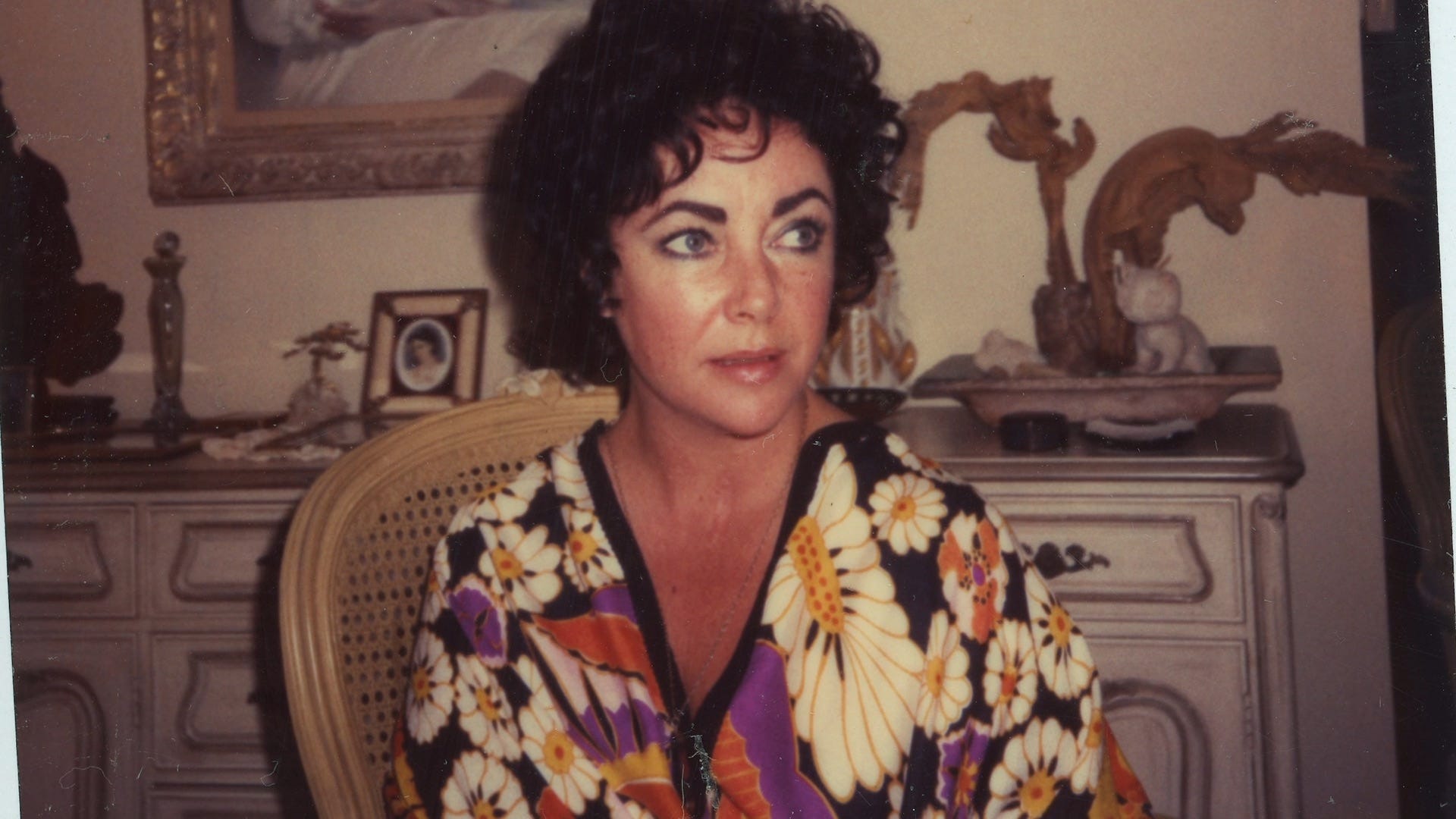
That time period includes husband number three Mike Todd’s tragic death, the subsequent affair and scandal with a married Eddie Fisher, almost dying of pneumonia, winning an Oscar, scoring a historic contract to star in Cleopatra, and the affair with Burton. (And that’s all within the span of four years.) “Hearing her talk about it and reflecting on it, it gives a much more kind of raw and emotional element,” Erzinger says.
The documentary doesn’t just use candid photos of Taylor. There are clips from talk show interviews with Burton, scenes from Taylor’s films that echo parts of her life, and newsreel footage—including everyday citizens weighing in on her marriage to Burton. “I don’t think she’s as attractive as she used to be,” one woman says with a wide grin below her cat’s eye sunglasses. “So she’ll have a harder time finding another one.” And then she giggles.
But Burstein smartly keeps the conversation going after the tapes end shortly before Who’s Afraid of Virginia Woolf? premiered. Through a selection of candid photos, film clips, and vintage talk show appearances, The Lost Tapes brings audiences through a decade of ups and downs for Taylor, from divorces to addiction. And then the documentary zeroes in on 1985, when Erzinger managed to, again, find a primary source for Taylor to keep telling her story.
“Once we received these Merryman tapes, we took that and said, ‘OK, this was for a Life Magazine profile. She did many such profiles throughout her life. Perhaps these journalists and writers have tapes,’” he says. As it turns out, Dominick Dunne’s archives had the original interview tapes from the Vanity Fair cover story he wrote in 1985, shortly after she helped raise $1 million in a single night for AIDS Project Los Angeles. (That works out to $2.97 million in 2025 dollars.)
Those contemporary accounts of her time at the Betty Ford Center and her involvement in fighting the AIDS epidemic bring to vivid life a previously neglected chapter of Taylor’s very public life. For a woman known for her big passions, the fight against AIDS is the one that demands to be remembered best. Elizabeth Taylor: The Lost Tapes is so adept at restoring Taylor’s voice to her narrative that it’s hard not to be reminded of one of Taylor’s iconic quotes about the lack of government response to AIDS: “It so angered me that I finally thought to myself, ‘Bitch, do something yourself instead of just sitting there getting angry. Do something.’”
![Elizabeth Taylor: The Lost Tapes [HBO]](https://meetmeatcrafty.com/wp-content/uploads/2025/10/9dbd26e2-ed56-410e-994a-cd322d993563_1920x1080.webp?w=1024)
 Meet Me at Crafty
Leave a comment